National survey: 13.6% of seventh to ninth graders use tobacco; more than half exposed to secondhand smoke at home

Skopje, 27 February 2026 (MIA) — A total of 13.6% of elementary school children, mostly seventh to ninth graders aged 13 to 15, use some type of tobacco product, according to the findings of a 2024 survey conducted in 75 schools nationwide and presented earlier Friday at a press conference at the Ministry of Health.
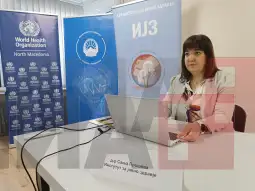
Speaking on the topic were Minister of Health Azir Aliu; World Health Organization country office head Akeem Ali; Public Health Institute director Marija Andonovska; and Public Health Institute's public health researcher Sanja Prosheva.
According to Prosheva, a total of 12.3% of 13- to 15-year-olds currently use tobacco.
She said that 5.3% currently smoked cigarettes, 4.9% currently used heated tobacco products, 3.6% currently used smokeless tobacco and 9% currently used e-cigarettes. Of them, 66.1% attempted to quit smoking in the past 12 months and 56.5% currently wanted to quit smoking, Prosheva said.
Also, the survey showed smoking on school premises remained a concern. In 2024, 45.1% of students saw someone smoking inside school buildings or on school property.
Minister Aliu said the WHO-supported survey had been carried out in 75 schools nationwide and included 4,670 participants.
The survey was the fourth in a series of nationally representative surveys done as part of the Global Tobacco Surveillance System. The finding that 13.6% of students aged 13 to 15 currently use some form of tobacco product was the highest prevalence reported so far, Aliu said.
The 9% who used e-cigarettes, he said, was twice the number reported in 2016.
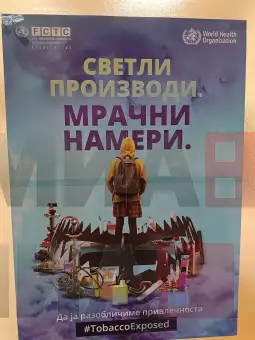
"Also concerning are the findings that as many as 57% of young people were exposed to tobacco smoke at home, and 55.4% were exposed to smoke in indoor public spaces," the health minister said.
He added that the survey showed that 73.2% of young smokers were not prevented from buying cigarettes because of their age.

However, Aliu said, it was important that 86.9% of participants supported the ban on smoking in indoor public spaces.
The state has finally taken their side, Aliu added, by developing the new draft Law on Protection from Smoking. Describing it as "a law for the new generations," he said it was aimed at making smoking socially unacceptable through a comprehensive approach shifting tobacco from a routine habit to an outdated, unhealthy behavior.
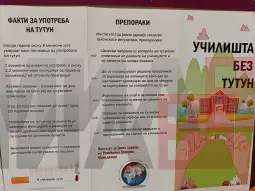
This approach includes protecting people from secondhand smoke in workplaces and other indoor public places, reducing appeal through banning flavored tobacco products, restricting marketing and exposure as well as limiting availability to minors and strengthening sales control, the health minister said.
According to him, there can be no compromise when it comes to young people’s health and that public interest will outweigh any commercial pressure.
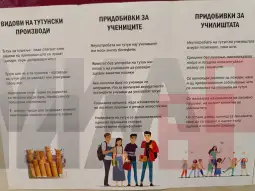
WHO representative Ali reiterated how harmful smoking is to young people’s health. When parents send their children to school, they expect a healthy and clean environment instead of them being exposed to tobacco in school, he said.
Ali stressed that the new law protects all non-smokers, but especially children.
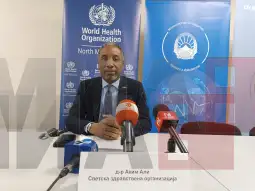
"It is time we protected the children," he said.
Public Health Institute director Andonovska said the survey was conducted so policymakers would create policies leading to public health improvements benefitting everyone. mr/


