Siljanovska Davkova at ADF2026: Proactive rather than reactive diplomacy needed

Antalya, 17 April 2026 (MIA) - More than ever, the world needs responsible leaders, early warning, as well as prevention and proactive diplomacy rather than reactive diplomacy, President Gordana Siljanovska Davkova told a Leaders' Panel as part of the 5th edition of the Antalya Diplomacy Forum (ADF2026) held under the theme "Mapping Tomorrow, Managing Uncertainties".
Speaking about global uncertainties, she warned of a rise of authoritarianism and rearming, as well as a serious crisis of political leadership, the President's Office said in a press release.
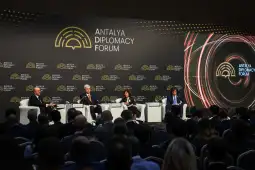
According to her, international law cannot be applied and respected without strong and stable international institutions. She pointed to an urgent need for deep reform of the UN, as well as the European Union, given the fact that both were formed as peace projects but both failed in some way, facing war.
As regards the Western Balkans, Siljanovska Davkova reaffirmed the position that European integration is not only a political, but also a security question, adding that resilience to threats by third actors is only possible if we are inside the EU. She reiterated that it is contrary to the basic European principles, embedded in the EU's constitutive documents, to condition membership on negotiations on identity issues, culture, history and language.
Kazakhstan President Kassym-Jomart Tokayev and Georgia Prime Minister Irakli Kobakhidze also participated in the panel. The discussion was moderated by Mevlüt Çavuşoğlu, former Minister of Foreign Affairs, Member of the Grand National Assembly and Head of the Turkish Delegation to the NATO Parliamentary Assembly.
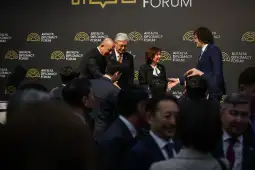
Panelists expressed their views on the key global challenges and uncertainties facing the international community in 2026, focusing on issues of geopolitical tensions, economic instability, climate risks, technological transformations and security threats.
They agreed that strengthening multilateral institutions is essential in building a more effective international system, highlighting the importance of anticipatory diplomacy, proactive recognition and management of new risks, as well as the need for modern strategic frameworks that will encourage cooperation between states in tackling common global challenges.
Photo/video: Siljanovska Davkova's Office


