Trajkov: EU accession to be a shared goal regardless of political affiliation
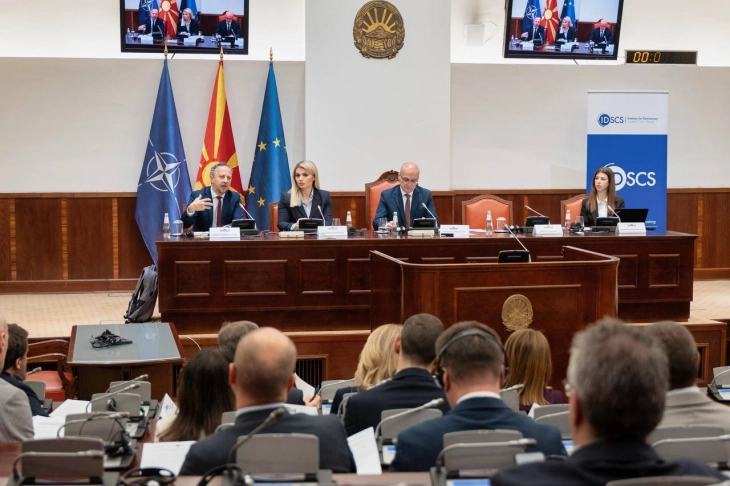
Skopje, 1 December 2025 (MIA) - Euro-integration for us means progress, better life, European values. That’s why, regardless of our political affiliation, in the end of the day we all have one shared goal – that the second strategic commitment of the country should be membership in the European Union, and this is something we should work on together, said Deputy Minister of European Affairs Viktorija Trajkov at an event Monday organized by the Cross-Party Parliamentary Group on Monitoring the Implementation of the Berlin Process Commitments and the Growth Plan Reform Agenda.
Trajkov said the consistent implementation of obligations from the Berlin Process and the Reform Agenda are among the government’s top priorities.
“This is a chance for our regional economic, social, and cultural unity, through which we will detect our weaknesses and transform them into opportunities. It is also a chance for a faster convergence with the EU through the implementation of European standards and values. I believe that the potential for creating opportunities through the Berlin Process and the Reform Agenda are immense, and the role of parliaments in a regional, but also in a national context, is crucial for a successful implementation of the established plans and priorities. The list of tasks we have received is long, but it shouldn’t discourage us. Instead, it should be a great challenge for all of us,” Trajkov stressed.
The Deputy Minister said the government is currently focused on implementing 29 steps by the end of the year in the areas of public financial management, public administration reform, energy, digital transition, development of the business sector, and rule of law reforms.
Marko Troshanovski, the head of the Institute for Democracy Societas Civilis Skopje (IDSCS) in his address at the event noted that the aim of the Growth Plan was to bring the countries of the region closer to the European single market, but also to encourage reforms and infrastructure investments. Troshanovski said part of the undertaken deadlines and obligations within the Reform Agenda are delayed in many fundamental and crucial sectors.
“Deputy Prime Minister [Arben] Fetai said by the end of the year we can expect the Criminal Code in a certain format, which would be a nice New Year’s greeting for all citizens, but also a significant contribution to what is called ‘Fundamentals’ or the reform area that refers to the fight against corruption and the rule of law. But there are also the other laws as well which we are waiting for, above all in the judiciary, where there is a relatively significant stagnation, we must, and we have no excuses not to implement them. We have grace periods from the European Commission of course, however, we mustn’t use this too often and too much, because it reduces our reform condition as a system and as a state. Consequently, the IDSCS will remain committed to summarizing, condensing, and making available its analyses and findings to you, the MPs and friends of the Berlin Process, so that in the future we can have more constructive and better-informed sessions of this kind,” Troshanovski said.
The head of the Cross-Party Parliamentary Group on Monitoring the Implementation of the Berlin Process Commitments and the Growth Plan Reform Agenda, MP Antonijo Miloshoski, stressed that Monday’s session of the Group will conduct a screening of what has been achieved so far and the remaining obligations.
Miloshoski said Parliament and the MPs, especially those that are members of the Group, will pay greater attention and organize more sessions discussing the Reform Agenda and the Berlin Process as projects of greater EU integration.
Within the session, two discussions were held: “The Berlin Process after London 2025 – Next Steps for the Parliamentary Dimension of the Process”, during which the main results and priorities from the Berlin Process Summit in London were presented, and a constructive dialogue was opened between Parliament and the government on the implementation of the undertaken regional and European commitments; and “The Reform Path towards the EU: Institutions, Implementation, and Recommendations”, where the degree of implementation of the steps and reforms from the Reform Agenda as part of the Growth Plan was discussed.
MIA file photo