EU agrees on new 2040 climate target to cut emissions by 90%
Brussels, 10 December 2025 (dpa/MIA) – The European Union plans to cut greenhouse gas emissions by 90% by 2040 compared to 1990 levels, under a provisional agreement struck in Brussels late on Tuesday between EU member states and the European Parliament.
The agreement also includes a one-year delay to a controversial climate measure, which postpones the implementation of the EU emissions trading system for road transport and buildings, according to statements from both sides.
The compromise still requires formal approval, though this is considered a formality.
The EU already had binding climate targets before the agreement, and the new goal represents another interim step.
By 2030, emissions must fall by 55% from 1990 levels. By 2050, the EU aims to be climate neutral, meaning it emits no more greenhouse gases than can be absorbed.
According to the European Environment Agency (EEA), the EU is largely on track to meet the 2030 target. Under the EU climate law, however, a binding 2040 target is also required. It is not yet clear when the new goal will formally enter into force.
Commission proposal weakened
The agreement with parliament follows lengthy debates among EU countries. The basis for the 2040 target was a proposal presented by the European Commission in July, which has now been significantly watered down.
Concerns over economic burdens, a tense geopolitical environment and challenges for industry had prompted resistance in several member states - including criticism that the 90% reduction was too high.
EU Climate Commissioner Wopke Hoekstra said the deal was pragmatic and ambitious, offering speed, predictability and flexibility. He added that it demonstrated how climate action, competitiveness and independence can go hand in hand and that it sends a strong signal to global partners.
Use of foreign climate credits
While the EU must meet existing climate targets through domestic action, up to five percentage points of the new 2040 target may be achieved from 2036 through international carbon credits. The details still need to be finalized.
Such credits would allow greenhouse gas emissions generated in the EU to be offset by projects in non-EU countries that remove or store carbon.
Critics fear, however, that economically weaker states in the Global South might set lower national climate goals to sell more credits, or that emission reductions could be counted twice.
Avoiding a surge in heating costs
Negotiators also agreed to delay by one year, from 2027 to 2028, the inclusion of fuels such as petrol and natural gas in the EU emissions trading system. The goal is to prevent sharp price increases for consumers for heating and petrol.
Under emissions trading, companies must hold permits for the greenhouse gases they emit. Extending the system to fuels was originally planned for 2027 and would particularly affect the transport and buildings sectors.
Greenhouse gases such as carbon dioxide (CO2), methane and nitrous oxide contribute to the greenhouse effect and play a major role in global warming.
Target to be reviewed regularly
The commission will assess every two years whether the EU is on the right path and whether the 2040 target remains compatible with Europe's competitiveness and scientific findings.
If necessary, the commission will be able to propose new legislation.
If carbon sinks, such as forests or peatlands, absorb less CO2 than expected, the reduction target could be adjusted.
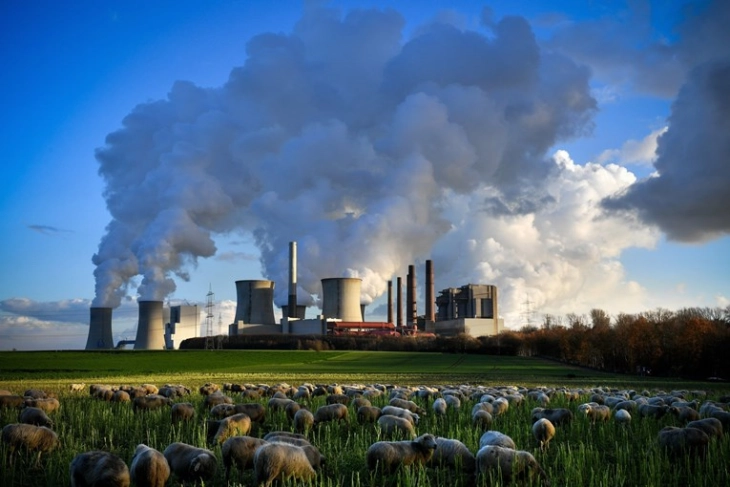
Photo: EPA illustration