Workshop on Education Strategy 2026-2032, the document should be adopted by year's end
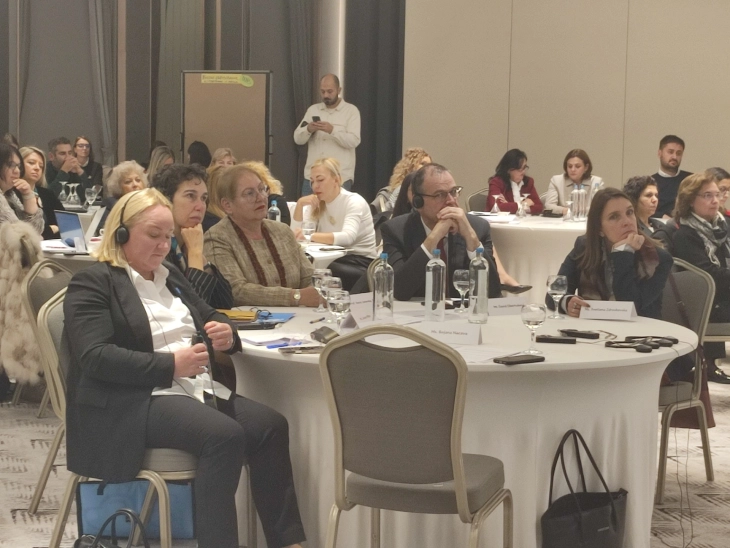
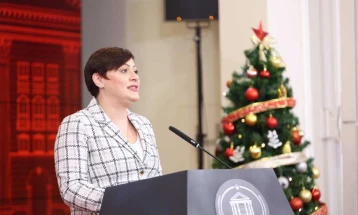
Skopje, 6 November 2025 (MIA) – A few more steps remain until the final Education Strategy 2026-2032 is adopted, which is being created for five months now, Minister of Education and Science Vesna Janevska said Thursday speaking at the second workshop for the preparation of the new document, which brought together representatives from institutions and from local and international partner organizations, including UNICEF, GIZ, UNDP and the World Bank.
The strategy providing a guideline for the Macedonian education in the next six years, Janevska said, should strengthen support for teachers and encourage development of their competences for modern teaching methods according to global educational trends and standards, better inclusion, single-shift classes, digital literacy, care for the mental and physical health of young people, etc.
Opening the workshop, the minister said “the government remains focused on all changes that need to happen until the final goal is met, because there is no other alternative.”
“Education is an expensive thing. But the value of quality is bigger than any other price. We kickstarted reforms in all educational segments, in parallel in some, because there is evident decline. PISA and TIMSS tests confirm it as well as the Shanghai list, also the European Commission reports and other relevant analyses. For year and a half, we have been implementing with strong enthusiasm programs that have been yielding results. But there must be continuity that ensures effectiveness. This continuity will be provided with the new Education Strategy 2026-2032,” noted Janevska.
Since the document started preparing, she said she had heard suggestions, proposals and solutions to current challenges. The adoption of the strategy will be followed by the hard part, she said, implementation and measuring of the achievements.
“At times I gave in, at times I stuck to my personal beliefs and the vision I had since taking office. We should complete the strategy and adopt it by the end of the year before we begin the difficult job in order to produce some results in the mid-term,” stated the minister.
Speaking at the event, UNICEF Representative Lesley Miller said the new strategy offers an opportunity to shape what’s coming next in classrooms, communities and in the lives of children.
“Far too many pupils leave school without having the basic competences they need to succeed. They have no math skills, no reading skills, no skill to analyse what they learn – these are the main foundations of lifelong studying. Without these skills, children make no progress. The Education Strategy should be bold aiming toward the future, should apply new technologies and artificial intelligence, but priority must be given to basic learning. We cannot lose sight of the fact that underprivileged children due to poverty, disability, ethnic origin still face obstacles, and they need clear and measurable goals. It should be the key component of any strategy. This means setting targets that are ambitious but tangible,” said Miller.
North Macedonia, she noted, has made an exceptional progress in the past few years implementing clear standards and grading, developing new curriculums and a framework for continuing professional development.
“But we have to be consistent in implementing, to have regular monitoring and quality insurance. We welcome the minister’s commitment to provide continuity because this strategy is key no matter who is in power. To make more progress to improve the quality of education is crucial,” the UNICEF official said.
It’s key that the strategy is adopted and implemented without ending up forgotten in a drawer, concurred the Regional Director of the German Association of International Cooperation (GIZ) David Oberhuber.
“We want it to be different and I see it’s different - from the minister’s commitment to how the process unfolded. The opinions of different parties that are involved should be taken into consideration, which will create a long-term credibility of the strategy. When a new government is elected and takes over the strategy, it may be reshaped, but the basics will remain the same,” he said
Anna Chernyshova, UNDP Deputy Resident Representative said the strategy is not only a political document, but also a clear roadmap for how education should progress until the Millennium Development Goal number 4 is met.
“To meet this goal, the educational system should be aligned with the demands of the 21st century in which ChatGPT is changing the world. New professions are needed and we need to think about it while preparing the strategy because the entire educational system should serve the labor market, not the other way round. We should have in mind the vision of the future – digital transformation, artificial intelligence and green transition, which will be the leading forces in every society,” she said.
Bojana Naceva of the World Bank also pointed to the need to respond to the demands of the new era by creating productive jobs that are most likely to contribute to reducing poverty and increasing prosperity.
“No one here sees the education strategy as a technical document. It is a framework that will lay down the direction our education should take in the next decade. What makes this strategy important and special is its comprehensiveness and the way it is being prepared with active engagement by all involved parties,” stated Naceva.
Photo: MIA