Janevska for MIA: Smart specialisation to boost economic growth, improve living standards in the country

Brussels, 3 December 2025 (MIA) - Implementing the plans outlined in the Smart Specialisation Strategy will boost economic growth, improve living standards in the country, and help meet the criteria for EU accession, Minister of Education and Science Vesna Janevska told MIA. She participated in a Brussels conference dedicated to smart specialisation strategies in the EU enlargement process.
“I feel that many citizens do not fully understand what smart specialisation means and its importance for our country. The strategy, developed with the European Commission’s Joint Research Centre, identifies the strongest economic sectors that should be developed to strengthen the economy. Macedonia’s growth is therefore directly linked to smart specialisation,” Janevska said, who also announced the establishment of the first Smart Specialisation Office within the Ministry of Education and Science.
She noted that the Smart Specialisation Strategy identified four key elements, called the pillars of the Macedonian economy, which include the information and communication technology sector, smart agriculture, the electromechanical industry or Industry 4.0 and sustainable materials and smart buildings. These pillars are supported by two horizontal elements: future energy and tourism.
“It is estimated that the development of these six areas will drive economic growth and improve living standards in Macedonia. Therefore, implementing smart specialisation is of utmost importance for the country’s progress and for meeting the standards for EU accession, that is, for integrating Macedonia into the European Union,” Janevska noted.
At the conference, Janevska spoke on the panel “Smart Specialisation Processes in the Western Balkans: Key Achievements and Experiences,” where she highlighted the significant progress the country has made over the past year and a half in the field of smart specialisation.
“The smart specialisation process has been set in motion. Previously, nothing happened in this area for about five years, but now, with support from the European Union and IPA funds, we are seriously investing in smart specialisation and are beginning to see its effects,” Janevska said.

She added that, based on what she heard from her colleagues from other countries at the conference, all Western Balkan countries are taking this work seriously and are striving to meet the EU requirements for implementing smart specialisation.
“I cannot say that we are first, but we are not last either; we are somewhere in the middle in implementing the first Action Plan and starting the second. Over the past year and a half, Macedonia has made significant investments, not only by the Ministry of Education and Science, but also by the ministries of Digital Transformation and Economy, and of course by the universities. Smart specialisation actually requires bringing together science, meaning universities, industry, the private sector, the state, and civil society, all of whom must communicate with each other, work to improve productivity, and use science to enhance innovation in the country,” Janevska said.
According to her, innovation does not mean inventing something new or creating patents, but improving all processes, digitizing them, and moving toward the green agenda and digital transformation, so that the country can integrate into European Union processes.
She noted that the European Commission’s Joint Research Centre (JRC), essentially a scientific hub through which the EU develops all its other policies, provides significant support to the country in these processes.
According to Minister Janevska, the country will not become part of the European Union until it is fully capable of functioning under the Union’s principles.
Janevska told MIA that on the conference sidelines she met with JRC Director-General Bernard Magenhan and Strategy Director Sabine Henzler. These discussions secured support for North Macedonia in four strategic directions: supervision and monitoring, the creation of the first science and technology park, technical support for the establishment of the Smart Specialisation Office and the National Agency for Innovation and Entrepreneurship (INOVA) for evaluating smart specialisation projects, and the development of a digital agriculture center, which will evolve from the existing laboratory at the Faculty of Agricultural Sciences and Food at Ss. Cyril and Methodius University into a center of excellence.
“The funds needed for smart specialisation come from the national budget and the business sector. The EU has generally criticized all Western Balkan countries for relying mainly on public funds, whereas smart specialisation works best when the private sector is also heavily involved and invests. But for that to happen, the private sector must have trust in the state. That’s why good legislation is necessary,” Janevska said.
She underlined that the Ministry of Education and Science, together with the Ministry of Digital Transformation, has already passed the Law on Innovation, Technological Development, and Entrepreneurship. She underscored the importance of involving small and medium-sized enterprises, which are supported by the state through INOVA and other projects, as well as the civil sector, which is fairly engaged but could participate more.
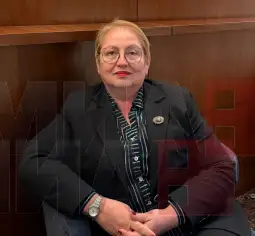
“We are on the right track. We received positive verbal evaluations and support for the four key elements, which indicates that we should be satisfied as a country, especially the Ministry, with everything it has accomplished,” Janevska emphasized.
Regarding the latest EC’s report on country’s progress on the EU path released at the beginning of last month, Janevska noted that most of the criticisms concern the judiciary and the fight against crime. She added that the government is working to meet some of the set indicators by the end of this year and during the next.
“In the field of education and science, we received relatively good assessments, especially in science. For education, the evaluations were not as high as we wished, but still relatively good. As Minister, and as part of my duty, I submitted a remark to the European Commission noting that some elements were not properly assessed. I understand this, because the report is prepared around May, and by the time it was published, we had already fulfilled additional indicators,” Janevska said.
She noted that the Ministry of Education and Science has fulfilled all obligations set by the Reform Agenda for this year and has even completed one indicator ahead of schedule. At the same time, it has implemented numerous reforms through the adoption and implementation of new laws on primary and secondary education. The Ministry is now preparing a new law on higher education, planned for adoption in the first quarter of 2026, as well as a new law on scientific research activities.
Janevska noted that the Ministry is pursuing both Reform Agenda and EU objectives, as well as standards needed for national progress. Efforts include digitalisation with the Ministry of Digital Transformation, opening research centers and accelerators with universities, and establishing the first AI center to boost research and innovation.
“All of this will improve the economy. The entire smart specialization initiative and everything we are doing is connected to the economy, and that is the most important outcome we need to achieve. Moreover, it is fair to say that the Ministry of Economy had nine research and science projects, while the Ministry of Education and Science dedicated 15 out of 45 scientific projects to smart specialization,” Janevska stated.
According to her, achievable visible results in this field requires establishing coordination between ministries, the private sector, the state and civil society. This will be the task of the first Smart Specialisation Office, which will operate within the Ministry of Education and Science.
She emphasized that the JRC currently has an open call for scholarships for scientists and, according to her information, nine of our researchers have already applied.
“I encourage others to apply as well. Additionally, next year we plan to announce a call to fund scientists who will work at the JRC, return to the country, and help innovate processes, which should improve the economy,” Janevska told MIA.
Photo: MIA


