Janevska: About 56 percent of population financially literate, to be improved through elective subjects

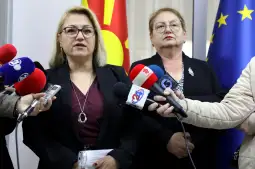
Skopje, 13 March 2026 (MIA) - An analysis of financial literacy in primary education conducted by the Bureau for Development of Education, shows that students are familiar with basic concepts, but they lack sufficient understanding of how to apply those concepts in everyday life, or how to put financial literacy into practice. Unfortunately, according to the OECD, almost 56 percent of the population is financially literate, which is unsatisfactory, said Minister of Education and Science, Vesna Janevska at Friday’s presentation of the findings.
Janevska said the Ministry of Education, together with the Bureau for Development of Education, the National Bank, the Finance Ministry, the Public Revenue Office, the Macedonian Banking Association, and other institutions is developing programs to help children learn from an early age how to manage their own funds or the resources available to them, to understand saving, investing, and assessing risks.
“We are seriously committed to improving this situation, not only through topics covered in certain subjects but also through elective subjects. We will continue working in this direction, both on financial literacy and on other challenges that students realistically face,” Janevska added.
 The head of the Bureau for Development of Education, Milka Trimchevska, noted that ahead of March 15, World Consumer Rights Day, the Bureau is presenting a report prepared by its expert team together with external collaborators.
“As a recognized institution, within its mandate, the Bureau implements the consumer protection program and, in cooperation with the relevant institutions, works to raise the level of financial literacy. We are working to enhance opportunities within the educational process so that students acquire knowledge and skills in financial literacy, and, of course, to shape individuals who will make responsible and informed financial decisions,” Trimchevska said.
At the presentation of the results, the Governor of the National Bank, Trajko Slaveski, said providers of financial services often advertise complex financial products aggressively and even sometimes deceptively, products which are beyond the understanding of most citizens. Slaveski stressed that education systems must adapt and set as a goal the integration of financial education into the curriculum, since, he said, financial literacy is not merely additional knowledge but a key foundation for responsible and conscious behavior.
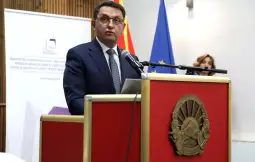
Slaveski noted that after the global financial crisis of 2008, there has been a global trend of including financial literacy in secondary school curricula.
“According to a global survey on financial literacy by Standard & Poor’s, only about one-third of adults worldwide are considered financially literate. This shows that the need for a systematic approach to improving financial literacy is greater than ever. Our goal is for financial literacy to be a continuous process of developing habits and knowledge across the population, especially among young people. The National Bank constantly undertakes activities to advance financial literacy, focusing on primary and secondary school students, as well as specialized lessons on specific economic topics for university students, who can apply to attend,” Slaveski said.


