Váradi for MIA: WizzAir upgrading Skopje base, another aircraft arriving in three weeks
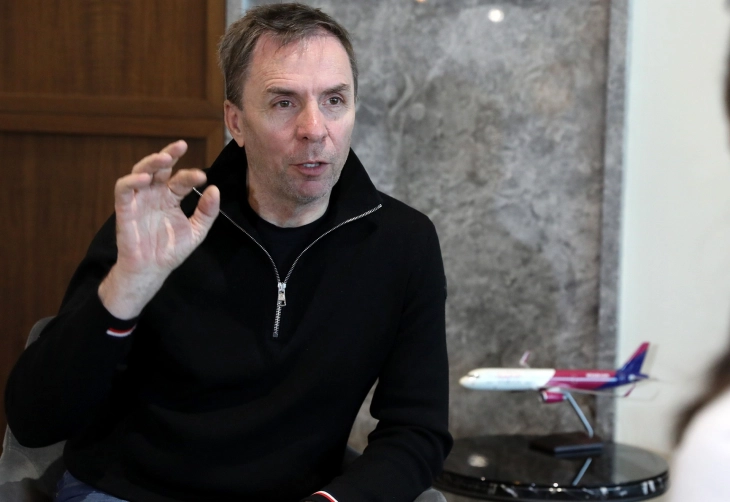
Skopje, 27 November 2025 (MIA) - In about three weeks from now, another aircraft will arrive in WizzAir’s Skopje base to add to the fleet. Also, the company is upgrading the fleet with newer technology aircraft and bigger aircraft, WizzAir CEO József Váradi says in an interview with MIA.
In addition to all the challenges all the airlines are facing, he says, we remain committed to expanding the network, increasing the number of flights to existing destinations and to maintaining the low prices for the services we offer.
WizzAir is going to convert the fleet of 180-seater aircraft to a fleet of 239-seater aircraft, which I think is great because Skopje will benefit from the best and most up-to-date technology available. The A321neo aircraft which we operate is the best aircraft currently available in the world. It's the most sought-after aircraft by airlines. We are in possession of that aircraft, and now Skopje will benefit from experiencing that aircraft, the Hungarian businessman says.
WizzAir, Váradi says, has a good track record here in the country. I think, he adds, the routes that we have been operating, most of them are very relevant to the needs of the consumers, and we are trying to understand where people want to fly.
“We are looking at three segments basically.”
“Given the history of the country, you have a lot of diaspora traffic. Macedonians living abroad want to connect with the motherland. Two, Macedonia is becoming increasingly relevant for tourism purposes for travellers. So, we want to make sure that we create the infrastructure, the link, the connectivity for boosting tourism here in Macedonia. And three, as the middle class is growing, so people have more money to spend, more disposable income, they also want to spend time on family vacations, visiting cities, etc. So, we try to cater an infrastructure for those purposes as well,” says Váradi.
According to him, the goal is to continue to excite the market with new opportunities and new routes and also to make sure that existing routes are also densified, more flights, more seats available on that.
WizzAir’s biggest challenge this year, and to an extent it will be, next year as well, is the recovery of our engine situation, says the CEO. Currently, the airline is flying an engine that has been recalled by the manufacturer for inspection and changing certain parts, that resulted in a significant portion of the fleet got grounded, like 20-25% of our fleet got grounded. Now it is getting recovered, so less and less aircraft are on the ground, but this is still significant.
“That kind of recovery process is occupying a lot of efforts and attention from the company. But at the same time, I also think that now, given the new aircraft deliveries we take from Airbus, we are growing again, and we are growing significantly. So if you just look at some of the numbers this year, we are carrying 72 million passengers on a total company basis. Next year, we are looking at carrying more than 80 million passengers. So kind of the next few years, every year, we are adding like 10, 10 plus million passengers to the franchise,” he adds.
Inflation has been affecting all European airlines, including WizzAir. What most airlines do is increase the prices, but we don’t do that, says Váradi.
I think all the European airlines are affected by inflation, inflationary pressure. Basically, you see inflation coming through infrastructure, energy, and labor, and that put pressure on the industry. Now, some airlines, and most of the airlines actually, what they do, they just price up.
“They have more costs, they increase the prices. We don't do that. What we do is we try to mitigate these headwinds by creating more efficiency in the system, so like applying new technology, updating the aircraft, they all kind of improve the economics of the operation of the aircraft, and that can offset this inflationary pressure. So we are not really expecting increasing prices. We try to hold the price level as much as we can in the marketplace,” CEO Váradi tells MIA.
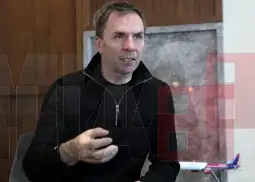
Below is WizzAir CEO József Váradi's interview in full:
You are back in Skopje for a short period of time. What is the purpose of your visit now?
Every year we visit our operating bases to meet our people, to meet the media, to meet our business partners, like the airports. And in a very short space of time, you kind of understand what is going on. So, this is a regular visit I am making to our bases. This is like a part of a bigger flyaround we call it. We go to a number of operating bases, spending a few hours there to interact with the stakeholders, and very importantly, with our employees. We have this culture in the company that we want to have a dialogue, a direct discussion between management and people on the ground, that we want to understand really what is going on here. What issues or opportunities we are seeing, how we relate to the market, how we relate to customers, how we relate to business partners. Because, you know, very quickly when you are sitting in an office, you lose touch with reality. So, this is very important.
During your last visit to Macedonia, you announced that six new aircraft will be added to the Skopje base. Are there specific activities, and do we know when it will happen?
Basically in about three weeks from now, we will be having another aircraft arriving to the fleet in Skopje. So, this is our Skopje number six. But it's not only that. From now on, we are changing the fleet here. We are upgrading the fleet with newer technology aircraft and bigger aircraft. So, we are going to convert the fleet of 180-seater aircraft to a fleet of 239-seater aircraft,which I think is great because Skopje will, will benefit from the best and most up-to-date technology available. The A321neo aircraft which we operate is the best aircraft currently available in the world. It's the most sought-after aircraft by airlines. We are in possession of that aircraft, and now Skopje will benefit from experiencing that aircraft.
The Skopje-Prague route will be renewed next month, and also there are flights to Cologne and Bari. What are your expectations for the traffic from these destinations, and what's your target for the number of passengers this year?
Yeah. So, we are going to hit more than two million passengers this year in 2025, and we will have a big jump off next year. Next year, we are looking at more like the 300 million passenger mark, because of the new aircraft coming and because of the upgrade from 180 seats to 239 seats. So, I think 2026 is going to be a big year for Skopje at Wizz Air just because of the capacity we are bringing to the market. We have a good track record here in the country. I think the routes that we have been operating, most of them are very relevant to the needs of the consumers, and we are trying to understand where people want to fly. We are looking at three segments basically. Of course, given the history of the country, you have a lot of diaspora traffic. You know, Macedonians living abroad want to connect with the motherland. Two, Macedonia is becoming increasingly relevant for tourism purposes for travelers. So, we want to make sure that we create the infrastructure, the link, the connectivity for boosting tourism here in Macedonia. And three, as the middle class is growing, so people have more money to spend, more disposable income, they also want to spend time on family vacations, visiting cities, etc. So, we try to cater an infrastructure for those purposes as well.

Can we expect some new routes in the near future?
We always bring new routes. So, I think our business is to continue to excite the market with new opportunities and new routes. But also to make sure that existing routes are also densified, more flights, more seats available on that. So, it is always a combination of densifying the existing network and extending the network with new routes.
Wizz Air has been a beneficiary of government subsidies since 2012. How do you assess the current subsidy model, and what do you think needs to be changed for further development of the air traffic in the country?
Yeah. So, let's not forget how the system is set up here in Skopje. You have an airport operator that actually is not cheap, it's very expensive. So, TAV is charging quite high charges. In order to offset that high charges, that's how the government incentives come into play. And those government incentives are only for a certain period. So really what it does is that it shares risks with the airline, with us, in introducing new capacity, introducing new routes. But after a while that, that subsidy is getting phased out, and we are on our own, and we are paying the higher charges of TAV. Then we are looking at the next set of new routes, and we get incentivised for that for a period of time before that support phases out. So, I would say that this is like a way of creating a network, creating connectivity, for the country. And the initial phase, when airlines usually lose money, that's an investment phase, the risk from investment is shared between the airline and the government.
What was the biggest challenge for Wizz Air in this current year? And what will be key in the next year for profitability and competitiveness?
I think our single biggest challenge this year, and to an extent it will be, next year as well, is the recovery of our engine situation. So you may recall that we are flying an engine that has been recalled by the manufacturer for inspection and changing certain parts, that resulted in a significant portion of our fleet got grounded, like 20-25% of our fleet got grounded. Now it is getting recovered, so less and less aircraft are on the ground, but this is still significant. So, that kind of recovery process is occupying a lot of efforts and attention from the company. But at the same time, I also think that now, given the new aircraft deliveries we take from Airbus, we are growing again, and we are growing significantly. So if you just look at some of the numbers this year, we are carrying 72 million passengers on a total company basis. Next year, we are looking at carrying more than 80 million passengers. So kind of the next few years, every year, we are adding like 10, 10 plus million passengers to the franchise. Uh, in terms of operations, we are adding 30-40 aircraft more to the franchise and to the operating model. We have 250 aircraft in the fleet, actually 250 aircraft is just arriving on Friday. So, it is a growing business, and we are very engaged with those growth opportunities, and some of those growth opportunities are happening here in Skopje in Macedonia.
What are the biggest challenges for the all airlines in Europe, and how will this affect prices for passengers?
I think all the European airlines are affected by inflation, inflationary pressure. Basically, you see inflation coming through infrastructure, energy, and labor, and that put pressure on the industry. Now, some airlines, and most of the airlines actually, what they do, they just price up. They have more cost, they increase the prices. We don't do that. What we do is we try to mitigate these headwinds by creating more efficiency in the system, so like applying new technology, updating the aircraft, they all kind of improve the economics of the operation of the aircraft, and that can offset this inflationary pressure. So we are not really expecting increasing prices. We try to hold the price level as much as we can in the marketplace. And with that, we will continue to stimulate the market, and we will continue to benefit customers with our low fares. We want to encourage people to keep flying and fly even more. That's why we are able to grow and most of other airlines are not growing in Europe.
Slavica Stefanovska
Photo: Darko Popov
Translation: MIA's English language service