Tomb of the Unknown Soldier in Athens - a symbol of lasting tribute to the nameless fallen

Athens, 8 November 2025 (MIA)
Sanja RISTOVSKA – MIA’s Athens correspondent
"For a little less than a century ago, in the heart of the Greek metropolis, located in Syntagma Square, right in front of the Hellenic Parliament building, stands the Tomb of the Unknown Soldier, a symbolic cenotaph in tribute to the heroes who died for their homeland but were never identified, a monument that is one of the main tourist attractions in Greece, a monument guarded by the members of the Presidential Guard, the so-called Evzones, but also a monument that has recently become relevant at a political level in Greece," MIA reports from Athens.
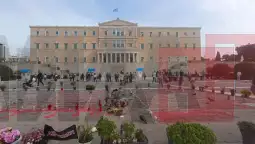
A government amendment to protect the monument, which bans holding of public gatherings, occupation and physical alteration in the immediate area of the Tomb of the Unknown Soldier, was passed last month and has put the monument in the focus of the Greek public, but has also created a difference of opinion among the citizens regarding the specific bill.
This difference was reflected in the public opinion survey conducted by the Pulse agency for the Greek Skai TV, but the citizens interviewed by MIA's Athens correspondent also have different views.
In the survey, 46 percent of respondents said they probably agree or definitely agree with the government amendment, whereas 44 percent said they probably/definitely disagree.
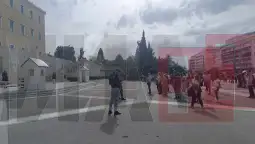
Unveiled in 1932 in honour of unidentified fallen heroes
The idea and decision to build the monument was taken by dictator Theodoros Pangalos, following a trend in many European countries to erect a monument in honour of unidentified fallen soldiers, and in 1926 a call was announced, which then approved a study designed by architect Emmanuel Lazaridis.
After years of debates and disagreements over the location and artistic construction, given that the Prime Minister of Greece at the time, Eleftherios Venizelos, believed that the cenotaph should have a central place and the best location was today's Syntagma Square, in 1930, the sculptor Fokion Rok created the relief of the fallen soldier, lying on his back with a shield and helmet, symbolizing peace, honour and dignity.
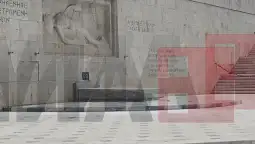
A large-scale excavation and levelling of the terrain (in front of today’s Parliament building) took place for the construction.
The monument was unveiled at an official ceremony two years later, on March 25, 1932, with the participation of many foreign delegations, and the guard of honour to the monument was drawn from the Presidential Guard, which was later renamed to Guard of the Tomb of the Unknown Soldier.
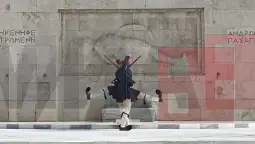
After the restoration of the monarchy under King George II in 1935, the guard was renamed the Royal Guard, but since 1973 it has been officially called the Presidential Guard, and is tasked with guarding the tomb 24 hours a day, in honour and respect for the unknown soldier.
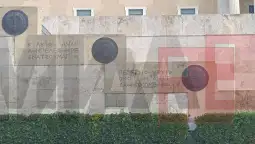
To the left and to the right of the monument are inscribed the names of key battle locations in Greek history, as well as phrases from the works of ancient Greek historian and general Thucydides.
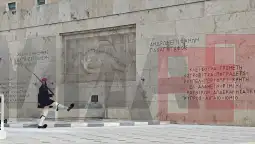
During national holidays or during official visits by heads of state and government, wreaths are laid in front of the Tomb of the Unknown Soldier as a sign of respect.
The monument is symbolically guarded around-the-clock by the Evzones of the Presidential Guard, elite soldiers dressed in traditional uniforms, who perform the impressive changing of the guard ceremony every hour in perfect synchrony, which attracts hundreds of tourists and locals.
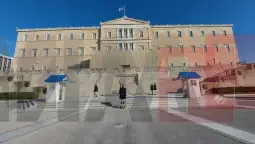
Makeshift memorial honouring Tempi disaster victims
For the past eight months, tourists have been drawn to another memorial, a makeshift one, set up just a few steps away from the cenotaph, dedicated to the victims of the February 2023 rail disaster.
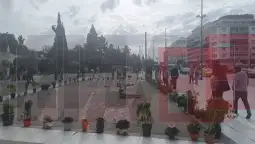
The names of the 57 people who were killed in the Tempi train crash, following the mass protests on February 28, exactly two years after the tragedy, were written in red paint on the ground, surrounded by candles and flowerpots, silently bearing witness to one of the greatest tragedies in Greece.
The idea for the makeshift memorial belongs to a group of young activists called Till the End. The group provided daily support to Panos Ruci – the father of a young man who was killed in the crash - while he staged a 23-day hunger strike.
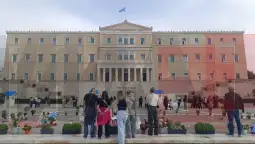
During Ruci's hunger strike, citizens gathered daily to express solidarity with him. Tents were also set up in the wider area, which was met with both criticism and approval from the public, but also opened up a discussion about whether such activities should take place at the specific location or should they be moved across the street to Syntagma Square.
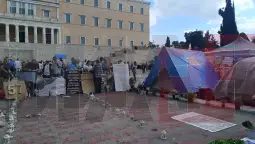
There were comments that solidarity is above all else, that the father's pain is also a collective pain, but also that the entire image with the tents set up dishonours the Tomb of the Unknown Soldier.
Ban on gatherings and protests at the Tomb of the Unknown Soldier
Two weeks after Ruci's hunger strike, the Greek government passed an amendment in Parliament to protect the monument and ban holding of public gatherings, occupation and physical alteration in the immediate area of the monument. The amendment also provides for a prison sentence of up to one year or a fine if the ban is violated.
The amendment triggered an outcry from the opposition parties, who called on the Government to withdraw it, but it was still approved by all 156 MPs from the ruling New Democracy party and three of the independent MPs.
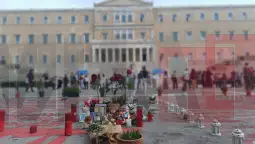
According to the amendment, the Ministry of National Defence undertakes all necessary measures for the maintenance, care and promotion of the Tomb of the Unknown Soldier, while the Greek Police is responsible for maintaining public order.
"I agree with the amendment, but I think it should have been passed much earlier. When I say much earlier, I mean 15-20 years earlier," says an older Greek woman.
A young Greek man, on the other hand, told MIA that "it is clear as day that the amendment was deliberately passed because of Ruci's hunger strike," adding that "the government never showed solidarity with the pain of the father who lost his son."
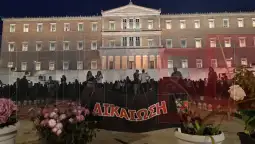
The Tomb of the Unknown Soldier - a silent witness to incidents during protests in Athens
The Tomb of the Unknown Soldier has "witnessed" in recent years a series of incidents during waves of protests over various issues, which were particularly frequent and violent during the economic crisis, as well as during the demonstrations against the Prespa Agreement.
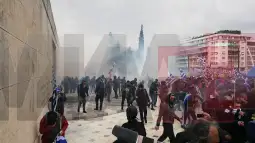
During protests in Athens, masked individuals often throw Molotov cocktails, pyrotechnics, bottles, marble, and stones, while the police respond with tear gas and stun grenades. This often takes place right at the monument, as evidenced by photos from MIA’s archive over the past years.
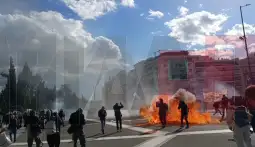
There have been instances in the past when protesters even managed to reach the entrance to the Parliament via the stairs right above the cenotaph, as well as instances when Evzones’ sentry boxes caught fire from the Molotov cocktails thrown.
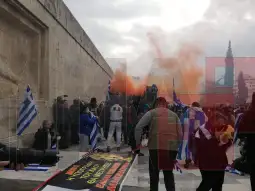
The new amendment, according to announcements, is expected to prevent the recurrence of such scenes in the future.
Photo: MIA


