Over 70 percent of citizens back EU membership, mild rise in euroscepticism: analysis
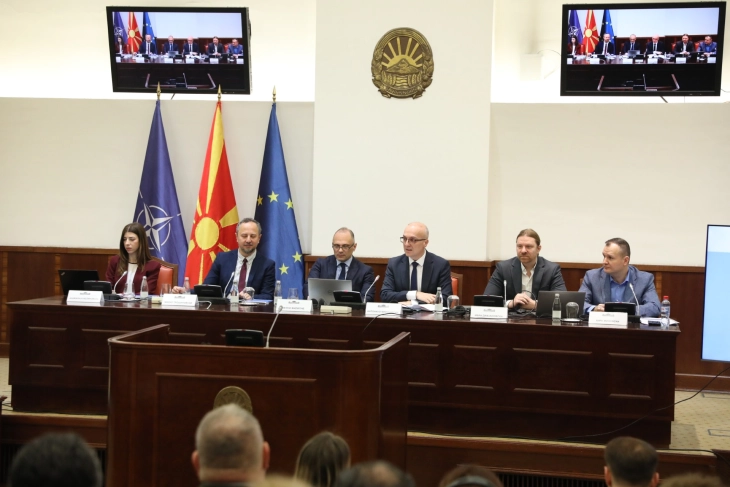
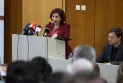
Skopje, 28 January 2026 (MIA) - A total of 71 percent of the country’s population was in favor of membership in the European Union in 2025, which is almost 10 percent higher compared to 2024, show the results of the “Analysis of Public Opinion on North Macedonia’s Accession to the European Union (2014-2025)” created by the Institute for Democracy "Societas Civilis" - Skopje (IDSCS) and presented Wednesday in Parliament.
The key findings of the analysis show that euroscpetic attitudes have mildly risen to 14 percent, compared to 2024, when they stood at 11 percent, while the number of undecided and apathetic respondents has significantly decreased over the past year.
The long-lasting disparity in support for EU membership between the two largest ethnic groups, ethnic Macedonians and ethnic Albanians, has narrowed. 71 percent of ethnic Macedonians are in favor of their country’s bid for EU membership, an increase of 15 percent compared to the previous year. Ethnic Albanians have been continuously expressing massive support for North Macedonia’s EU membership aspiration. This support is maintained in 2025 as well, as 76 percent of respondents belonging to this group have expressed their support. However, these figures are lower by 8 percent compared to the previous year.
According to the analysis, 40 percent of the population believes the country is ready to become a member state, while slightly above 60 percent of the population believes that the country has achieved progress in the accession process over the past year. The results of the public opinion analysis show that 46 percent of the population thinks that the obstructions from the neighboring countries are the biggest impediment to North Macedonia’s EU accesion progress.
The number of respondents who believe that the country will become a member of the EU in the next 3 to 5 years has increased to 30 percent in 2025, while a relatively high portion of the population (19 percent) remains pessimistic about North Macedonia’s prospects for EU membership.
Sixty percent of respondents believe that EU membership would not stop the trend of emigration of young people.
At the presentation of the analysis in Parliament, Anamarija Velinovska from IDSCS highlighted the gap between ethnic Macedonians and ethnic Macedonians when it comes to support for the adoption of the constitutional amendments needed for EU membership.
“What we have been following for three years now is that support for the constitutional amendments stands at 24 percent, and here we have an obvious gap between ethnic Macedonians and ethnic Albanians. In fact, 57 percent of ethnic Albanians back the constitutional changes, while only 11 percent of Macedonian respondents do,” Velinovska said, adding that there is also an increase in respondents who believe the negotiating framework should be reopened while the number of respondents who think the accession process should be halted fully is declining.

The head of IDSCS, Marko Troshanovski, noted that after several years of decline, support for the EU has seen a significant increase in 2025 and exceeds 70 percent.
“What is also interesting is that there is a drop in the number of citizens who believe that Macedonia should sit by and do nothing about the enlargement process. In 2023, this figure was 29 percent, now it’s 21 percent,” Troshanovski said.
Troshanovski added that the citizens continue to see the EU as the country’s most important and influential partner.
The Head of Office of the Konrad Adenauer Foundation in North Macedonia, Daniel Braun, said Germany is doing everything to ensure EU membership of the Western Balkan countries is possible.
“We have been for five years now which means we are committed, but on the other hand I understand why the Macedonian people believe the EU path is unfair. The truth is that in the history of the EU certain things have constantly happened that certain EU member states have thought were unfair. Efforts should be made by both parties to resolve this issue – both the EU and Macedonia should commit to this – but in any case, we should not just stick to our positions, instead we should remain open and perhaps find new solutions,” Braun said.
Antonio Miloshoski, Chair of Parliament’s Committee on European Affairs, said there were no dilemmas that EU membership remains a goal for the country, but the dilemma is how to get there.
“I believe the frustration of some of the Macedonian citizens is justified because in our case the rules of the game are being changed very often and certain obstacles are being erected that have nothing to do with the Copenhagen criteria. That is why I believe the EU should have been more open and more sincere in its intentions,” Miloshoski stressed.
In answer to a journalist’s question over whether the increased support for EU membership could push the Government to think differently about the constitutional amendments, Miloshoski said there are different opinions on the issue in Macedonian society.
“For Macedonia, the bigger problem lies in the uncertainty of whether any national concession will actually move the country closer to its goal or whether it will simply serve as a prelude to the next blockade, demand, or ultimatum, one, two, or three years from now, again on issues unrelated to the Copenhagen criteria. That is why I believe it is important for Brussels to continue its efforts and help create the conditions for a high-level meeting between officials from Macedonia and Bulgaria,” Miloshoski said.
The Chair of the National Euro-Integration Council, Venko Filipche expressed concern about the “anti-European rhetoric” of the Government, adding that the Government “places the blame on Europe while not doing its own homework”.
Photo: MIA