Mickoski: SMART/MK 2030 strategy is a clear plan for a modern, digital and democratic country
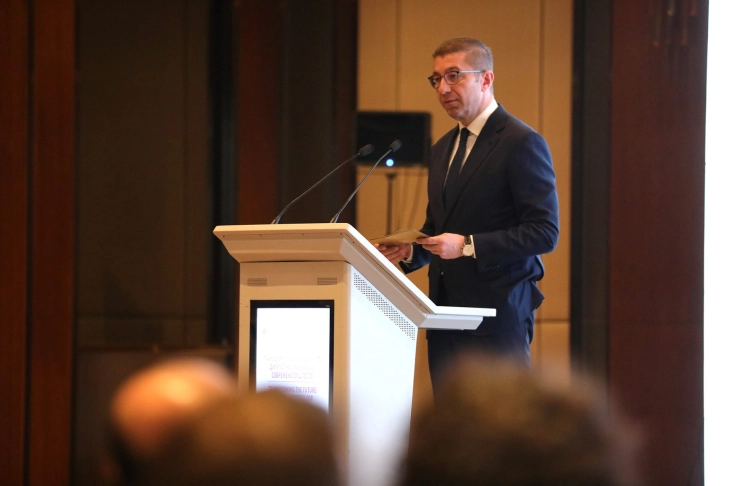
Skopje, 19 December 2025 (MIA) – Digital transformation doesn’t only involve the introduction of new technologies. It is a systemic process requiring deeper change in the way the country functions – in the culture of institutions and in its relations with citizens and businesses. It involves simpler and quicker services, less red tape, more accountability and increasing public participation in the creation of public policies, said Prime Minister Hristijan Mickoski delivering welcoming remarks at Friday’s conference promoting the National ICT Development Strategy – SMART/MK 2030, a document aligned with the European Digital Decade and the Development Agenda.
The National ICT Development Strategy – SMART/MK 2030, said Mickoski, is a vision and also a clear plan, a response to real challenges our society is facing and a roadmap of what kind of country we want to be in the next decade.

“Today, we are not promoting yet another strategic document. Today, we are reaffirming our determination to build a modern, smart and digital country. We are laying down the foundations today. Our goal is clear: smart, digital and democratic Macedonia by 2030. Macedonia that looks ahead, investing in knowledge, technology and people,” said Mickoski.
He added that his government as designation digitisation as one of the key strategic priorities because “a digital country is a precondition for rule of law and efficient fight against corruption.”

The SMART/MK 2030 strategy, said the prime minister, shapes the road to digital transformation of the country in line with our specifics, values and long-term state interests. It is a detailed and realistic roadmap for overcoming development challenges in the field of information and communication technologies and providing an accelerated digital development in all sectors, primarily in public administration, education and healthcare, economy and local development.
“There is no strong economy without digital skills, there is no modern society without digitally literate citizens and there is no competitive country without an innovative ICT sector,” stressed Mickoski.

The SMART/MK 2030 strategy is based on four pillars: ICT Infrastructure and Connectivity – developing a secure, accessible, and sustainable digital infrastructure as the foundation for digital transformation; Digital Competences and Inclusiveness – building digital skills and ensuring equal access to digital opportunities for all citizens; E-Governance and Electronic Services – improving public services, transparency, and trust in institutions through digital solutions, and Businesses, Innovation, Artificial Intelligence, and New Technologies – fostering the digital economy, the startup ecosystem, and the adoption of new technologies.
Photo: MIA