Dimitrieska-Kochoska: Crime mustn't be profitable, illegally acquired assets to be returned to society with systemic approach
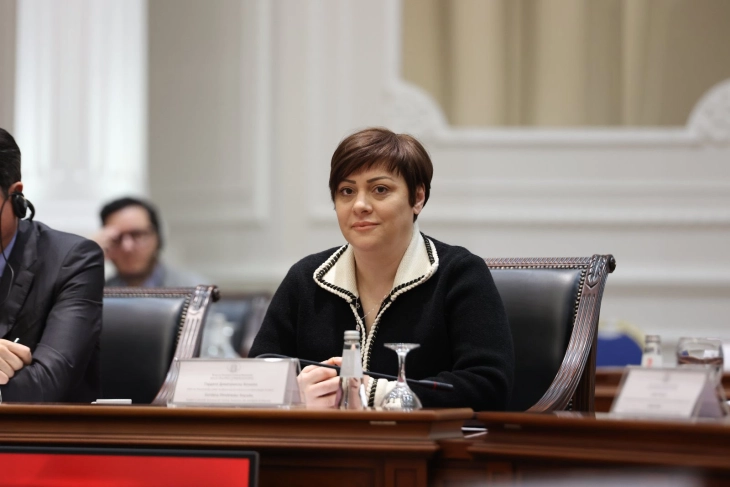
Skopje, 2 February 2026 (MIA) – Our message is clear – crime must not and will not be profitable. With systemic approach, strong institutions and clear accountability we will create conditions allowing illegally acquired assets to be identified, confiscated and returned in the society. The Ministry of Finance will contribute to the council being active, functioning and result-oriented, Minister of Finance Gordana Dimitrieska-Kochoska said addressing Monday’s constitutive session of the National Council for Financial Investigations and Asset Confiscation.
By establishing the National Council for Financial Investigations and Asset Confiscation, she said, the state is making a clear step setting up a reinforced and structural system of liability, coordination and results.
“The Ministry plays a central role in this process because financial probes and confiscation of illegally acquired assets is not a matter of security and justice, but a matter of fiscal stability, integrity of the financial system and trust in the institutions. Being multi-layered, our jurisdiction covers key institutions that are directly involved in discovering, monitoring and preventing illegal financial trends, including the Financial Police, the Customs Administration, the system tackling money laundering and the financing of terrorism,” stated Dimitrieska-Kochoska.
The goal, she noted, is a functioning legal framework that paves the way for swift coordinated investigations.
In the past several years, the Minister said, the Financial Police has significantly intensified its performance producing clear and visible results. From nine financial investigations in 2022, 17 in 2023, nine in 2024 to a clear breakthrough in 2025 – 58 financial investigations probing almost 400 individuals and 95 legal entities.
“We’re aware the fight against organized crime knows no borders. The Finance Ministry is actively engaged in strengthening international cooperation, most importantly with EU agencies – Europol, Eurojust and OLAF. The establishment of the national council is a reflection of the awareness that even the best strategy is just a document unless there is strong mechanism for monitoring, coordination and political support of its implementation,” said Minister Dimitrieska-Kochovska.
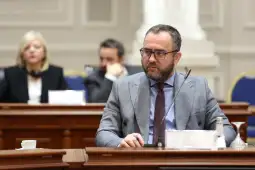
Interior Minister Panche Toshkovski said the country is at a crucial time when it has to strengthen trust in the institutions and to create a system that is resilient, efficient and transparent.
“In addition to being considered crucial for the EU integration bid, this strategy also boosts the fight against corruption thus increasing public trust in the institutions. In 2025, the focus was on establishing functioning mechanisms for financial investigations as an integral part of investigations into severe crimes. The annual report suggests that progress was made especially in improving intersectoral coordination. It is also important that 2025 recorded a rise in the number of financial investigations as well as improvement of the practices for identifying and freezing assets acquired in a criminal way,” he said.
However, the Minister stressed, challenges remain. “The shortage of financial experts and analysts in the Public Prosecutor's Office, the limited staffing capacities in the Financial Police, and the incomplete functioning of the Agency for the Management of Seized Assets are realities that require urgent interventions,” Toshkovski said adding the Interior Ministry will insist on hiring more staff and creating a functioning mechanism for social reuse of confiscated assets.
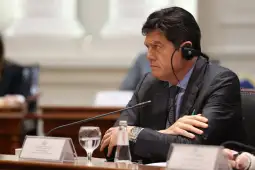
Financial investigations and asset confiscation are part of the fight against serious crime, corruption, money laundering and financing of terrorism, EU Ambassador Michalis Rokas said speaking at the event.
“Illegally acquired means and their confiscation discourage criminal activities. This leads to discovering other criminal activities and strategies for busting entire criminal networks. The EU is constantly revising our strategic legislation to react to the challenges rising by emerging criminal trends,” said Rokas.
The EU, he mentioned, in 2025 adopted an internal protection strategy that emphasizes the importance of tracking money in the fight against organized crime and terrorism.
“The most effective way to combat organised crime is against the financial assets acquired through crime, not just the recovery of the assets, which dismantles criminal organisations operating outside, both within and outside the EU. A key piece of legislation in this regard is the European Directive on Asset Recovery and Confiscation, which builds on previous legal frameworks,” said the Ambassador.
Photo: MIA; government