Mickoski: If EU guarantees identity, it should confirm it with a decision – we are ready to deliver only with reliable guarantees
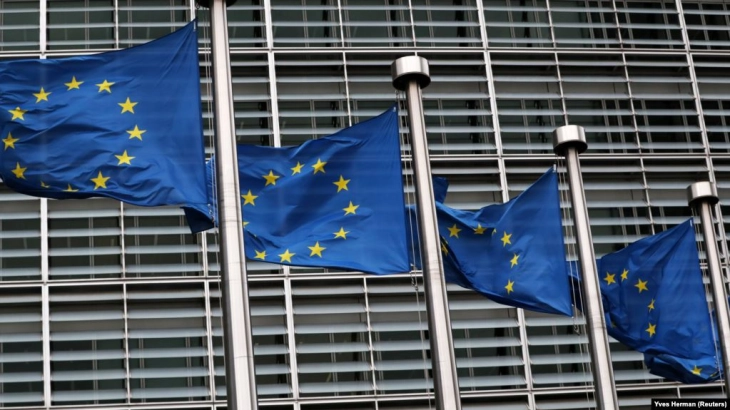
Skopje, 5 February 2026 (MIA) - The Government’s position on the constitutional amendments remains unchanged and they will not be implemented without clear guarantees that the Euro-integration process won’t have new blockades and bilateral conditions, said Prime Minister Hristijan Mickoski in an interview Thursday with public broadcaster MRT.
The Prime Minister said the country is prepared to respect the undertaken obligations, but, he said he expects the same from neighboring countries and the European Union. Mickoski asked for reciprocity in respecting rights, pointing specifically to Bulgaria’s obligation to comply with the judgements of the European Court of Human Rights in Strasbourg.
“Do we all respect international law? We do. If we respect international law, and if we are aware of the obligations accepted by the previous government, as catastrophic as they were, they were accepted by our government, regardless of who is currently the prime minister, whether he likes it or not. If you act outside the institutions you will be isolated, and then the question is what kind of future awaits the country. As bitter as all of this may be, it is the reality,” Mickoski said.
According to the Prime Minister, it would be a principled position for Bulgaria to respect the conventions it has ratified, which would allow the Macedonian community in the country to register its own organization.
“We also ask that they be aware of the obligations undertaken by some of their governments. If a government of our eastern neighbor has assumed obligations by signing and ratifying resolutions, conventions on the protection of human rights, respecting decisions of the European Court of Human Rights in Strasbourg, and so on, what we expect is that they honor them. And that means allowing the Macedonian community to register as an organization through which it can engage culturally and educationally; that community should have its own representative in the Council of Ministers for Minority Rights, which operates within the government of our eastern neighbor. That is a principled position,” Mickoski said.
The Prime Minister also touched upon talks he has had with representatives of the international community, which, he said, have provided assurances that the EU would not permit new blockades and that it recognizes the Macedonian identity. However, Mickoski stressed that these assurances need to be made official through a conclusion adopted by the Council of the European Union.
“If that is the case, if you really think that, then please, adopt it as a conclusion, so we can go before the citizens and say: ‘Do we want to join the European Union? We do. Did we ask the European Union for guarantees about our identity, our language, that there would be no bilateral vetoes? Here, the Council has adopted a new conclusion for us, you see, it delivers exactly that. On the other hand, look, our eastern neighbor has allowed OMO “Ilinden” – Pirin to be registered, and now we have a representative in the Council of Ministers for Minority Rights within that Government,’ and so on. Which means that then we would have guarantees we can trust. In that case we can discuss what we, as a Government, will deliver,” Mickoski underscored.
Regarding reports about a possible “non-paper” from the EU's Commissioner for Enlargement, Marta Kos, or new documents that would facilitate membership, the Prime Minister said that such a document has not yet arrived.
“No, we have not received such a ‘non-paper.’ We do have some reports about what the outlines of such a thing might look like. From the information we have, those outlines at the moment do not depend on the Commission, but rather on the Council, on the member states. So, the Commission may put forward a proposal, but for all of this to work, the member states must agree,” Mickoski said.
The Prime Minister urged caution in making public statements, noting that the process depends less on the country and far more on the political will of the member states to adopt new methodologies, such as gradual integration.
“If there is political will among the member states, then they should accept the proposal that may come from the Commission to ease the accession process, or some new methodology, or, as they call it, ‘gradual integration,’ which would include safeguards or certain protective mechanisms. What would those safeguards mean? That you cannot use structural funds for everything. There was even an idea that the Western Balkan countries should not have the right to a veto, and some went so far as to suggest we should not even have a commissioner for anything. So, all of this is being put on the table as an idea, but it still has no concrete form,” Mickoski concluded in the interview with MRT.
MIA file photo


