Decentralization and digitalization - path to efficient and transparent local self-government
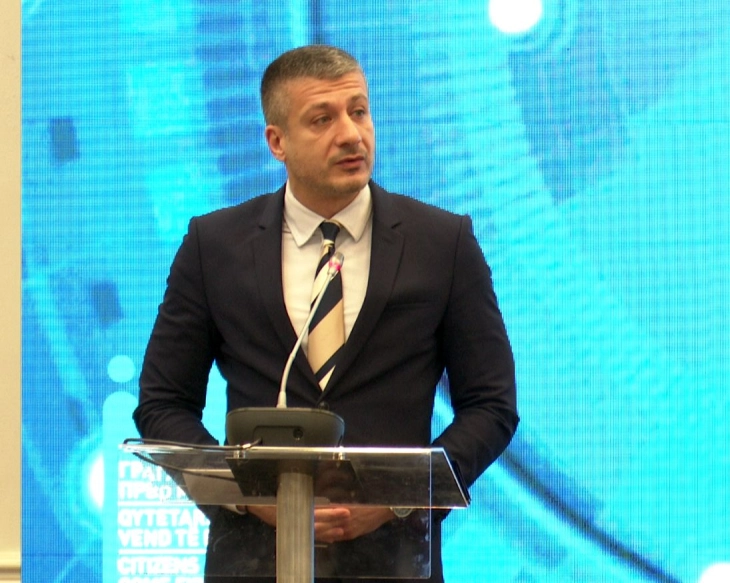
Skopje, 11 December 2025 (MIA) - Addressing the seventh annual Conference on Local Self-Government and Decentralization entitled "Vision for Reforms in Sustainable Development and Accessible Services to Citizens", Minister of Local Self-Government Zlatko Perinski said recent local election results reaffirm the Government's policy of strong support for municipalities, since the very beginning of its mandate.
"If we look back over the past period, it is clear that behind this policy is a process of exceptional strategic importance, which is changing the reality in the area of local self-government and creating a basis for long-term development. First, I would like to note and mention the positive narrative of the European Commission in the country's progress report, this year replacing the term "no progress" with "limited progress", said Perinski.
The Minister pointed out that amendments to the Law on Local Self-Government, which has not been adapted for more than two decades, are a key step in overcoming the challenges in the functioning of the local self-government. New mechanisms include improving communal order, equal opportunities, preventing corruption, digitizing services and establishing municipal inspectorates.
"With the resource centre for supporting municipalities, we directly respond to the needs of local self-government and move the country towards better alignment with European standards," Perinski added.
He announced that in 2026, the Government will provide concrete support in updating the taxpayer bases, in order to strengthen the financial capacities of municipalities.
"We expect municipalities to show responsibility in improving the collection of their own revenues," the Minister noted.
In the past period, around 1,200 infrastructure projects worth Mden 20 billion have been implemented through intervention measures, with the aim of revitalizing the local economy and improving the quality of infrastructure. Perinski also announced drafting of a new five-year program for sustainable local development and decentralization, as well as continuing the cooperation with the embassies of Switzerland and Sweden and the UNDP.
Minister of Digital Transformation Stefan Andonovski pointed out that digitalization is a prerequisite for fair and equal service for all citizens.
"Our vision is that citizens and municipalities don't waste time and money on paper documents and archives," said Andonovski, announcing an e-document management system, connecting municipalities into the interoperability platform and integrating local services on the national portal uslugi.gov.mk.
A state that wants sustainable development and quality services must be decentralized and digitalized. We can only take that path together, Andonovski said.
Swiss Ambassador Christoph Sommer said decentralization is all about community-driven development.
"Decentralization is empowering people at the local level. It transfers not only authority, but also responsibility. In their essence, local self-governments, being closest to the people, are best positioned to tailor public services to meet community needs, allocate resources more efficiently, foster the local private sector and encourage active civic engagement. Our priorities are clear, enhancing the knowledge and skills of municipal councillors, increasing efficiency of the local authorities by promoting digitalization, promoting citizen participation, particularly among vulnerable groups, women and youth, and finally, reducing the space for corruption by supporting systemic changes to increase transparency and institutional integrity," Sommer pointed out, adding that Switzerland remains dedicated to the partnership towards even more efficient, transparent and accountable local self-government in North Macedonia.
Swedish Ambassador Ola Sohlström stressed that Sweden is a firm believer in decentralization.
"We believe, and studies seem to be pointing in this direction, that public services, whether education, healthcare or infrastructure are the most cost-effective, transparent and responsive when they are delivered close to the citizens who use them. But we also know that decentralization is not a magic wand, not a silver bullet. You can't just devolve responsibilities and mandates to the local government without also devolving resources and capacity to handle it. Sweden has funded UNDP here in North Macedonia with exactly that purpose, building municipalities' capacity for project implementation, to help municipalities to better plan the resources, increase the delivery of quality infrastructure projects," Sohlström pointed out.
According to him, the municipal development index (MDI), integrated local development planning and the technical documentation fund are three key policy tools tailored to address challenges.
UNDP Deputy Resident Representative Anna Chernyshova said UNDP currently has a portfolio of about 25 projects in North Macedonia, and every project has a component dealing with local municipalities and local development. She noted that this year's conference comes at a pivotal moment, with newly elected municipal councillors and mayors.
"In the wake of recent local elections, we gathered here to reflect on our progress, renew on our commitments, and chart a course of action for the future," Chernyshova said, assuring of UNDP's continued commitment.
Chernyshova pointed out that the foundation for any successful project is high quality technical documentation, mentioning the example of the newly established regional centre for homeless pets, developed based on a feasibility study and implemented thanks to the partnership with Switzerland and Sweden, collectively resulting in over USD 100 million investment.
Photo: MIA


