World Meteorological Day: Experts warn climate change threatens country's 180,000 farmers
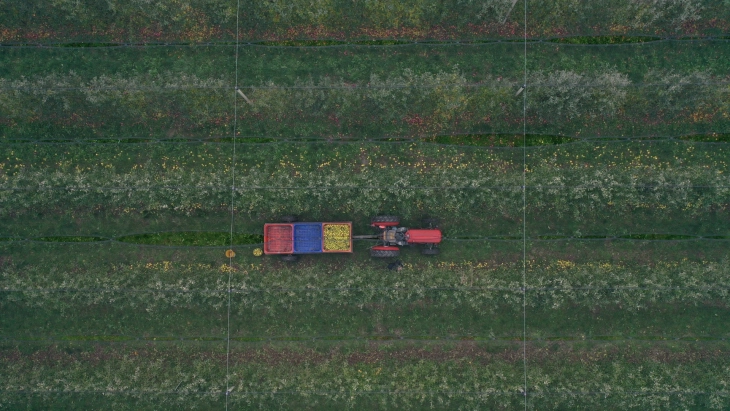
Skopje, 23 March 2026 (MIA) — Extreme heat and lack of rain are no longer distant threats but an "everyday reality" for the country's 180,000 farmers, experts warned on World Meteorological Day.
A new report from the GIZ German Society for International Cooperation, a global service provider in international cooperation for sustainable development and education, has pointed out that 2011–2020 was the country’s warmest decade on record.
Projections show temperatures will continue to climb through 2050 as summer rainfall declines, threatening the sustainability of the nation's food supply.
Ordan Chukaliev, a professor at the state university's Faculty of Agricultural Sciences and Food, said the problem was not just less rain, but that the timing of the rain is unpredictable.
"Water will be even scarcer during the growing season, yet we will face more floods because rainfall will be less frequent but more intense," Chukaliev said.
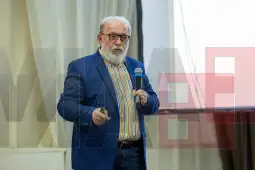
According to Chukaliev, agriculture is especially vulnerable because it is "directly exposed" to the elements and climate risks turn into immediate economic damage.
Stevan Orozovikj, executive director of the National Federation of Farmers, said unstable conditions make it nearly impossible for farmers to plan sowing, irrigation and harvesting.
"This leads to reduced food production and calls into question the sustainability of agricultural holdings," Orozovikj said.
He urged for investments in modern irrigation, more funding for green technology as well as training to help farmers adapt to the changing climate. He also said experts and state officials should work together to ensure a more sustainable and resilient agriculture.

To this aim, GIZ has established a regional climate partnership between Germany and the Western Balkans, the report said. In North Macedonia, a pilot project with the Faculty of Agricultural Sciences and Food is currently testing precision irrigation to conserve water, climate-resistant crop varieties and protective netting, frost protection and software modeling tools as well as cover crops to maintain soil health.
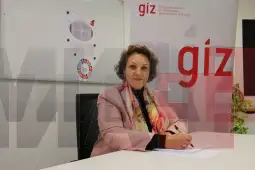
Irena Dzhimrevska, an agriculture advisor at GIZ, said the project aims to turn data into practice. Chukaliev added that all findings will be published as open-source materials and shared with the Agency for the Promotion and Development of Agriculture to ensure every farmer has access to the instructions.
"We need to bring advanced technologies and practices to the fields if we want to secure our children's future, because the changes that are ahead are serious," Chukaliev said.
"This is the moment to act," he said. "If we wait for the changes to fully reach us, it will be too late."
As climate change is changing how food is grown, the state needs to act faster to support farmers through combining weather data, science and new technologies, which are key to a more resilient, sustainable and competitive agriculture in North Macedonia, the GIZ report said. mr/


