Shiamishis: Thessaloniki-Skopje oil pipeline to reopen
Athens, 24 November 2023 (MIA) - After a decade of inactivity there is an opportunity to reopen the Thessaloniki-Skopje oil pipeline, as the competent regulatory authority in North Macedonia has given a green light and issued a permit, says HELLENiQ ENERGY Managing Director Andreas Shiamishis, MIA reports from Athens.
In an interview with Greek daily Kathimerini, Shiamishis says this is an "important positive development" and that years of efforts and discussions "have finally yielded results."
"However, there is still work to be done for the oil pipeline to start commercial operations. There are significant open issues, which I believe both sides will solve through good will. We will continue to work on this issue because HELLENiQ ENERGY has a strategic position on this market, including a long-term plan. Let me remind you, we have been in North Macedonia for over 20 years," notes Shamishis.
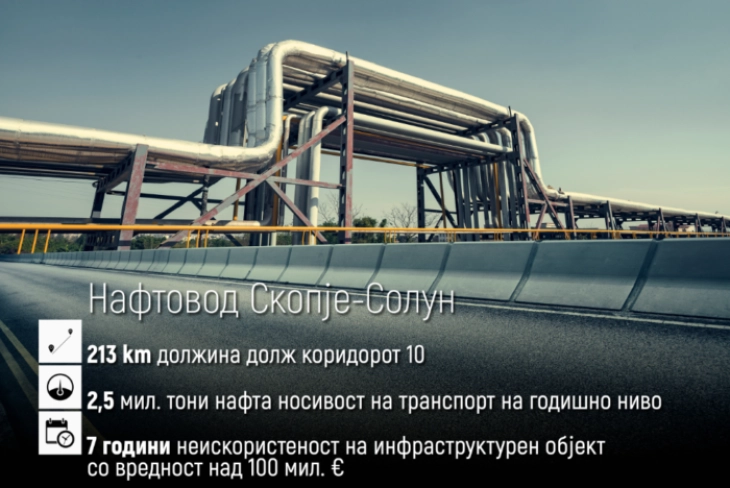
According to him, the oil pipeline can transport 2.5 million tons of petroleum and petroleum products (diesel, kerosene and gasoline) annually.
As to whether the pipeline is able to operate after so many years of inactivity, Shiamishis answers affirmatively and explained that they recently completed a full inspection using the latest technologies, and did everything necessary to get the pipeline operating again, "as soon as all prerequisites are met," adding that they extended the project till June 2051.
This arrangement, he adds, will offer great benefits to both sides, which are not only economic, “but will also contribute significantly to energy security and stability in the wider Balkan region," and that instead of using trains and hundreds of tankers, the oil will be transported through the pipeline.

Shiamishis stresses that HELLENiQ ENERGY guarantees an uninterrupted supply of diesel to North Macedonia, and the country "will have the opportunity to become an important regional energy hub for nearby destinations, thus upgrading its position and role in the wider region."
The pipeline was built in 2002 and is owned by Vardax with a 20 percent share from the Government of North Macedonia, whose main goal was to connect Thessaloniki refineries with the then OKTA refinery in Skopje.
Shiamishis told Kathimerini that in 2013 it was deemed unprofitable for OKTA to continue as a refinery, instead it was decided that the facilities would be used as a regional supply center for the Western Balkans to transport the most contemporary and cleanest products.
OKTA's facilities were modified for their new function with significant investments being made for their modernization, but the pipeline “remained inactive, due to the delay in the change of its license".
"Efforts have intensified since 2020, through the establishment of a new joint commission tasked with finding overlapping areas between the parties involved in a more favorable environment. In November of last year, once all conditions were met, our subsidiary Vardax, which owns the gas pipeline, submitted a request to the competent regulatory authority in North Macedonia, to obtain a permit for the oil pipeline to operate for the transport of refined products, instead of petroleum. This opened the way for the positive results I mentioned earlier," underlines Shiamishis. ssh/ik/
Photo: MIA archive/Kathimerini


