EU urges restraint in Middle East as Trump threatens major strikes
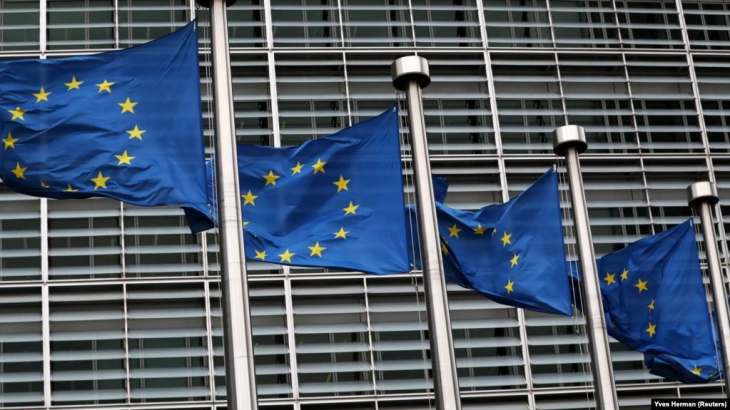
Brussels, 19 March 2026 (dpa/MIA) - European Union leaders called for calm in the Middle East at a Brussels summit, after attacks on energy facilities and threats by US President Donald Trump to strike a major Iranian gas field.
"We will advocate for de-escalation and a return to stability in the Middle East," said French President Emmanuel Macron, as he arrived at the meeting on Thursday.
"The fighting should cease, at least for a few days, to try to give negotiations a chance," Macron said, who previously had called for a suspension of attacks on oil and gas facilities in the Middle East.
Following an Israeli strike on Iran's South Pars natural gas field, Iran hit multiple energy sites in the region, including key Qatari gas facilities.
Reacting to the retaliatory strikes, Trump threatened to "massively blow up the entirety of" South Pars, the largest gas field in the world, which Iran shares with Qatar, should Tehran attack Qatar again.
"We need an exit from this war, not escalation," urged EU top diplomat Kaja Kallas.
EU countries faced with soaring energy prices
Fresh attacks on energy sites pushed fuel prices higher, extending a surge triggered by US and Israeli airstrikes on Iran nearly three weeks ago.
EU member states have been at odds over how to ease the burden of soaring energy bills on consumers and business.
Ahead of the summit, a group of five EU countries, including Spain and Sweden, pleaded for doubling down on renewable energy as a response to the price surges.
Others, like Italy and Poland, have called for reforms of the EU's carbon pricing scheme, the Emissions Trading System (ETS).
Under the ETS, businesses in sectors such as electricity generation, industrial manufacturing and aviation must buy allowances for their greenhouse-gas emissions. The system currently covers around 40% of total EU emissions.
Critics say high energy prices and emissions costs are placing a heavy burden on energy-intensive industries.
Germany recently advocated for adjustments, including to the limits on how much greenhouse gas an industrial plant can emit to qualify for free allowances.
The recent sharp rise in oil and gas prices has also reignited the debate about possible subsidies or price caps.
High energy prices and their impact on the EU's competitiveness have been an issue for the bloc long before the war in Iran started, prompting calls for cutting red tape and large-scale investments.
Spat over Strait of Hormuz
The Brussels meeting comes amid a spat between Trump and European allies over military assistance to ensure safe passage for commercial shipping through the Strait of Hormuz.
The strait, a major shipping route and the only path from The Gulf to the open sea, has been effectively blocked by Iran in retaliation for US and Israeli airstrikes, with commercial vessels coming under attack in the region. The blockade has exacerbated to price surges.
Trump repeatedly threatened fellow NATO members over their reluctance to get involved in securing that passage, including suggesting that NATO may have a "very bad" future.
European allies, however, ruled out participation in a potential military operation to secure fuel shipments.
German Chancellor Friedrich Merz reiterated his stance that Germany "will only be able to become involved once the weapons are silent" and pending an international mandate.
Weighing in on the dispute, NATO Secretary General Mark Rutte signalled optimism that the row will be resolved.
"I am confident that allies, as always, will do everything in support of our shared interests," Rutte told reporters. "We will find a way forward."
"Everybody agrees this strait cannot stay closed. It has to open up again as soon as possible," Rutte said. "This is crucial for the world's economy."
Photo: archive


