Michel Rojkind for MIA: Chair is complex, which makes it compelling; happy to hear another foreign architect involved
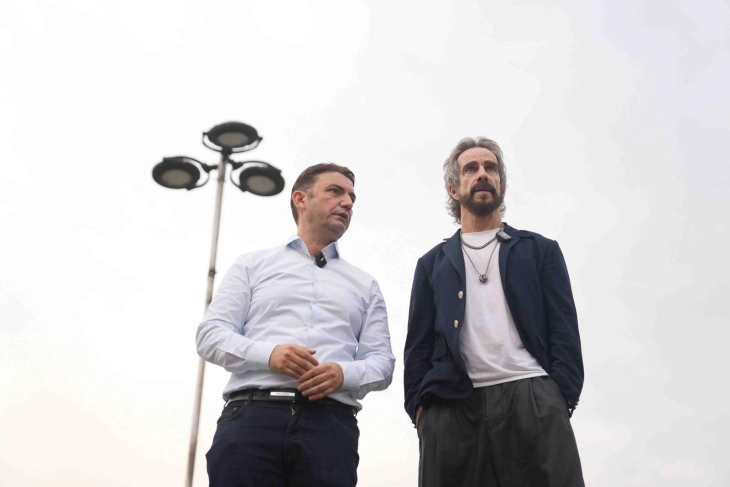
Skopje, 30 August 2025 (MIA)
Fami BAJRAMI
"Chair is complex in every sense, and that is precisely what makes it compelling. Density here is not only about how many people live within 3.5 square kilometers. It is about the intensity of everyday life, the layers of history in the Old Bazaar, the presence of multiple cultures and faiths, the informal economies, and the social networks that hold the district together.
"When we speak about complexity, we are speaking about a living system that includes the physical city, the people who animate it, and the memories and rituals that give it meaning," says prominent Mexican architect Michel Rojkind, who is a member of Chair mayoral candidate Bujar Osmani's election campaign team, in this interview for MIA.
Rojkind has already started getting to know the municipality and its multicultural nature. In the interview, he speaks about the advantage he may bring Osmani in the mayoral race while also encouraging the participation of other foreign architects. He also reveals, among other things, when he will present his architectural vision and blueprints for Chair.
Who is Michel Rojkind?
I am an architect born and based in Mexico City, where I founded and lead Rojkind Arquitectos. Living and working in one of the most vibrant and complex cities in the world has shaped the way I think about design. Mexico City, with its density, diversity, and constant reinvention, has taught me that architecture must be more than the construction of buildings. It is about creating systems of connection, reciprocity, and transformation that give people a stronger sense of belonging.
From this foundation, my practice has grown into an international platform of collaborations. We have worked in the Americas, Europe, and other parts of the world, always adapting to the unique conditions of each place while carrying a consistent philosophy. For me, architecture is most powerful when it acts as a catalyst for social, cultural, and ecological regeneration.
Throughout the years, we have collaborated across all sectors, from public institutions to private developers to civic organizations. These diverse partnerships have reinforced the idea that meaningful transformation can only happen when different perspectives come together. To reach this potential, architecture cannot work in isolation. The challenges of our time, from climate change to social fragmentation and questions of cultural identity, require collaboration across disciplines.
Many of the projects I am most proud of were the result of working closely with sociologists, environmental engineers, artists, musicians, neuroscientists, and local craftspeople. These partnerships expand the way we see and allow us to design not only physical spaces but also experiences, ecosystems, and new forms of community.
Architecture has always been a bridge discipline. It connects the technical with the emotional, the scientific with the cultural, and the visible with what often goes unseen. When it works in dialogue with other fields, it has the power to create futures that are not only functional but also deeply human, inclusive, and resilient.
Do you consider Chair a complex project, given its density?
Chair is complex in every sense, and that is precisely what makes it compelling. Density here is not only about how many people live within 3.5 square kilometers. It is about the intensity of everyday life, the layers of history in the Old Bazaar, the presence of multiple cultures and faiths, the informal economies, and the social networks that hold the district together.
When we speak about complexity, we are speaking about a living system that includes the physical city, the people who animate it, and the memories and rituals that give it meaning. I see density as a powerful engine for proximity and creativity when it is supported by the right conditions. The task is to convert crowding into livability through human scale streets, generous shade, water sensitive design, and a network of small public spaces that invite people to meet, rest, trade, and celebrate. Mobility must question the existing car culture and privilege walking, cycling, and universal access, linking the Bazaar with squares, schools, places of worship, and homes. Housing needs careful attention, with rehabilitation and gentle additions that protect residents from displacement while bringing services and opportunity closer to where people already live.
This is also an ecological question. Chair can reduce heat, capture stormwater, and increase tree canopy through pocket gardens, permeable surfaces, and roof terraces that return nature to the urban fabric. It is a cultural question as well. We must protect heritage while allowing contemporary life to thrive, so that craft, music, and market culture can evolve without losing their roots. For this reason our strategy works at many scales at once. We begin by listening and mapping, we pilot precise interventions, we measure what matters, and we build long term stewardship with the community. In that way density becomes vibrancy, and complexity becomes a source of strength.
Beyond urban transformation, what are the most critical issues?
Urban change only succeeds when it responds to people in their daily lives. The priorities I see reach beyond drawings and construction. They are about safety, dignity, belonging, and the ability of residents to shape what happens next.
Healing the social fabric is as important as any physical work. Transformation is not a single project. It is a shared practice measured by safer streets, stronger ties, healthier bodies, and a deeper sense of belonging.
Safety and dignity in public life: Create a public realm where everyone feels comfortable at any hour. This means good lighting, clear sight lines, active ground floors, gender sensitive design, and universal access for children, elders, and people with disabilities. Nighttime design matters as much as daytime design.
Social cohesion and intercultural life: Invest in the everyday rituals that bring people together. Support multilingual programming, collaboration among schools and faith communities, youth exchanges, arts and sports, and careful work with memory and heritage. Give people spaces and reasons to meet, listen, and celebrate together.
Economic inclusion and livelihoods: Strengthen the local economy so change benefits residents. Back small merchants and craftspeople with fair market infrastructure, micro finance, training, storage and logistics, and digital tools. Guide visitor flows so income remains in the neighborhood.
Housing stability and proximity: Protect current residents from displacement while improving living conditions. Focus on rehabilitation, incremental upgrades, services close to home, mixed income models, and legal support where tenure is insecure. Keep families near schools, work, and care.
Climate and health resilience: Treat ecology and health as core infrastructure. Set canopy targets, build cool corridors, capture stormwater, improve air quality, modernize waste systems, and grow urban gardens. Prepare for heat with shade, water, and places of rest.
Mobility that serves everyday life: Create new structures to park cars and free streets. Prioritize walking, cycling, and universal access. Create safe routes to school, affordable transit, and last mile solutions that link the Bazaar, squares, schools, clinics, and homes. Streets should feel like places to be, not only corridors to pass through.
Governance and trust: Build clear, transparent processes that invite participation. Use citizen assemblies, neighborhood councils, and participatory budgeting. Share data openly, set measurable goals, and establish a culture of maintenance with local stewards.
Education and culture: Support libraries, makerspaces, music and sport programs, and platforms that keep heritage alive in contemporary ways. Culture is not a museum piece. It is a daily practice that strengthens identity and openness at the same time.
Implementation capacity and finance: Form partnerships across public, private, and civic sectors. Work in phases that move from pilot to scale. Tie each intervention to local jobs, training, and long term stewardship so the benefits remain in the community.
Do you believe your project will be an advantage for Bujar Osmani?
I view this work as a commitment to the public good. If there is an advantage, it should be measured by how well the people of Chair are served. Our aim is to raise the quality of daily life, strengthen civic trust, and leave a framework that any administration can steward with integrity.
What matters is the platform that Mr. Osmani is creating for inclusive work. His focus on participation and civic healing gives us the conditions to align architectural vision with social benefit. That means open conversations, clear processes, and practical steps that residents can understand and shape.
To keep this nonpartisan and oriented to outcomes, we intend to work with simple guardrails: Open invitations to participate, with meetings in multiple languages and at accessible hours. A community advisory group that includes youth, elders, merchants, faith leaders, and cultural workers. Public reporting of goals and progress, so people can see what is planned, what is built, and how it is maintained. Pilot projects that are small, useful, and testable, so the community can judge what works before scaling.
Success should be visible and measurable in everyday terms. Safer streets and squares, more shade and trees, easier access for children and elders, stronger local commerce, and cultural programs that bring people together. These outcomes will benefit residents first. If that work reflects positively on Mr. Osmani, it will be because the process was honest, transparent, and effective.
Are you voluntarily involved, as Osmani has said?
Yes. I am participating as a friend and because I believe in the potential of this project. There is no financial arrangement at this stage. Beginning in this spirit keeps the focus on the public interest. It helps build trust, invites open participation, and allows the first phase to be about careful listening rather than fast delivery. When the work starts with presence and attention, the design that follows is more precise, more ethical, and more durable.
My commitment is also shaped by ongoing involvement in the neighboring country of Albania. That experience matters for Chair. The region shares histories, markets, places of worship, family networks, and cultural rituals that cross borders. Many of the challenges are similar. How to balance heritage and contemporary life. How to strengthen local commerce while welcoming visitors. How to cool streets, harvest rain, and grow shade in a warming climate. How to protect housing stability in dense neighborhoods. Learning with partners in Albania helps us move faster and with greater sensitivity in Skopje, and it creates opportunities for meaningful exchange between communities on both sides.
This regional work from so many colleagues in the area has taught us practical methods that we can adapt for Chair. Participatory forums that are multilingual and welcoming. Micro interventions that test ideas at human scale before they are expanded. Adaptive reuse that keeps memory alive while meeting present needs. Water sensitive plazas, cool corridors, and small gardens that improve public health. Training programs with local craftspeople and youth so that investment stays in the community. These are tools we will bring to the process.
Entering as a volunteer also gives independence from short election cycles. It lets us collaborate with all sectors, public, private, and civic, and to convene regional exchanges among architects, merchants, faith leaders, educators, and artists. As the work advances and responsibilities grow, we will define transparent agreements, clear roles, and pathways for building local capacity, so that the long-term benefits remain in Chair.
When can we expect a more detailed presentation?
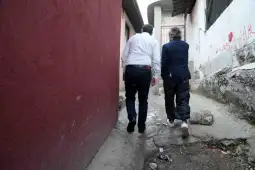
Our work with SON Architects, UNO, and a circle of local specialists is advancing in clearly defined phases. We began with listening and mapping. We are walking the streets, speaking with residents, merchants, faith communities, educators, and youth. We are documenting how people actually use space at different hours and in different seasons. This foundation allows the design to grow from real needs rather than from assumptions.
A significant part of our confidence comes from ongoing collaborations with SON Architects across Albania at many scales. These partnerships have taught us practical methods that are very relevant for Chair. Multilingual listening sessions that welcome elders and youth. Co-design studios inside public buildings. Low-cost prototypes that test ideas at the scale of a street or a plaza. Training programs with craftspeople and students so that investment builds local capacity. Best car culture practices to free streets from car and prioritize pedestrian life. Water sensitive design that turns heat and storm events into opportunities for public health and urban nature. The lessons from this regional work will help us move with care and with efficiency in Skopje, and they also open the door for meaningful exchange between communities in North Macedonia and Albania.
The intention is to share a fuller vision by September. That presentation will not be a single event. It will be the public moment of a process that remains open and participatory. What you can expect in September is a set of materials that make the vision concrete and actionable. An atlas that shows priorities and opportunities. A portfolio of interventions at several scales, from micro upgrades to larger civic moves, each with indicatives. An implementation framework that clarifies roles across public, private, and civic partners. A stewardship plan for maintenance and programming. And a clear process for continued participation so that residents remain authors of the work.
The goal is simple and ambitious at the same time. Share a compelling vision, prove it with pilots, measure what matters, and build a pathway that any administration and the community can carry forward together.
How challenging is it that another candidate has also engaged an international architect?
Plural expertise is a strength for Chair. When more voices study the same place, the conversation becomes richer and the city benefits from a wider set of references and skills. What matters is not who is speaking the loudest, but which ideas prove most relevant to daily life, to heritage continuity, to ecological performance, and to inclusion. If multiple teams raise the quality of proposals against these clear criteria, the community wins.
Our approach is distinct in its method. We begin with patient listening and fieldwork. We build trust with residents and merchants. We translate what we hear into small pilot actions that can be tested in real conditions. We gather evidence on comfort, safety, commerce, use by women and children, and nighttime presence. We refine with the community before scaling. We pair design with stewardship plans so places are cared for long after a ribbon is cut. This is slow at the beginning, but it creates momentum that lasts. Intercultural values guide how we will measure success. More shared events across communities. More streets and squares used by many groups at different hours. More women and youth who feel safe and welcomed. More vendors from different traditions who thrive in the same market. More public space programming that blends music, craft, and ritual from many cultures. A higher sense of belonging reported by residents in several languages.
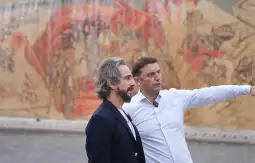
We also welcome dialogue with the other team. There is room to share baseline maps, climate data, and mobility findings. There is value in joint site walks, open technical sessions, and a shared public calendar of workshops so people are not asked to repeat the same stories. If we can align on simple urban standards such as shade targets, water capture, materials that age well, clear wayfinding, and universal access, then different proposals will still feel coherent at the city scale.
The deeper point is that authorship belongs to the community. Architects can frame choices, test ideas, and coordinate expertise, but the real measure of success is whether residents feel that these spaces are theirs. To keep that focus, we will publish our methods and progress, invite independent review from local universities and cultural institutions, and make it easy for citizens to follow what is planned, what is built, and how it is maintained.
Which projects from your career do you highlight as most significant?
I value the projects where architecture becomes a platform for public life, culture, and care. They relate directly to what we have been discussing for Chair, such as listening before drawing, working across disciplines, building with communities, and pairing design with stewardship and programming.
Foro Boca Philharmonic concert hall, Veracruz: Foro Boca began as a concert hall and grew into a cultural engine for an entire waterfront. We worked with musicians, the municipality, local businesses, and residents to ensure that rehearsals, youth programs, open air performances, and festivals could spill into the public realm. The building anchors a promenade that invites people to gather during the day and at night. Its robust concrete volumes respond to coastal conditions, while the public spaces around it encourage everyday use, not only formal events. A single cultural node can spark a network of small rituals, markets, and shared moments when it is planned with the community and maintained with care.
The Ledger, Bentonville: The Ledger rethinks the relationship between work, health, and the city. Its exterior bike paths connect every level to the street, so movement and access become part of the experience for cyclists, families with strollers, and people who prefer not to use elevators. Terraces and ground level spaces host public art, talks, and small markets. The project required close coordination with the city on mobility and with many partners on daily programming. We measured comfort, shade, and patterns of use, and we adjusted details as people began to occupy the building. Mobility and public space are inseparable. When streets and buildings invite gentle movement, the city becomes healthier, more inclusive, and more alive.
Cineteca Nacional national film institute, Mexico City: At Cineteca we transformed a film archive and cinema complex into a civic landscape. Large shaded canopies, planted courts, and permeable surfaces turned a heat stressed site into a cooler microclimate. The plazas are free to enter, which encourages study, conversation, and spontaneous events from morning to night. We worked with cultural institutions and local vendors so that the life of the place would not depend only on ticketed programming. Its about the power of generous public space. When shade, water, seating, and culture come together, people stay longer, feel safer, and create their own uses.
Across these projects, the method has been consistent. Begin with listening in many languages. Prototype small actions in real space and time. Measure what matters, like safety for women and children, night time use, thermal comfort, and the strength of local commerce. Build partnerships across public, private, and civic sectors. Train local stewards so places are cared for after the opening inauguration. Treat ecology and culture as core infrastructure, not as afterthoughts.
This approach is reinforced by ongoing collaborations with SON Architects across Albania at many scales, from historic cores and neighborhood streets to cultural programming and mobility upgrades. That regional work teaches us how to adapt methods to local realities, how to welcome many cultures into the same process, and how to translate vision into practical steps that communities can own.
What are your plans for the future beyond North Macedonia?
I will continue to grow a practice that treats architecture as a regenerative force. I see our work as the creation of operating systems for communities. These are practical frameworks that connect design, culture, ecology, and governance so that places can care for themselves over time. The goal is the same whether the work is in Mexico, North Macedonia, or elsewhere. We want futures that are more conscious, more inclusive, and more resilient.
We are living in a divided world, which makes this a rare moment to benefit from all cultures. Architecture can be a place of encounter. It can turn difference into a shared asset.
Our mission is to recognize the other, to listen with care, and to design in ways that allow many traditions to live together in dignity. When we approach a city with this spirit, planning becomes a practice of respect and reciprocity rather than control.
Regional collaboration amongst all disciplines remains very important. Our ongoing work with SON Architects across Albania will continue, from historic cores and neighborhood upgrades to mobility, culture, and public health. The region shares histories and family ties that cross borders, and there is much to learn in both directions. We will keep organizing exchanges between cultures and places, and connect these lessons to partners in other countries. This network allows ideas to travel, and it helps each place avoid the cost of starting from zero.
The present and future of the practice is to be of service, to design with care, to measure what matters, and to leave behind systems that communities can own. Buildings will still be part of the story, but the real legacy is the culture of stewardship that grows around them.