Trajko Karev, Krushevo Republic president's grandson: Biggest hurt that Nikola Karev erased from anthem
Krushevo, 2 August 2025
Elizabeta MITRESKA
We met with Trajko Karev, one of the four grandsons of the Krushevo Republic president's oldest brother, for coffee at the Krushevo Room.
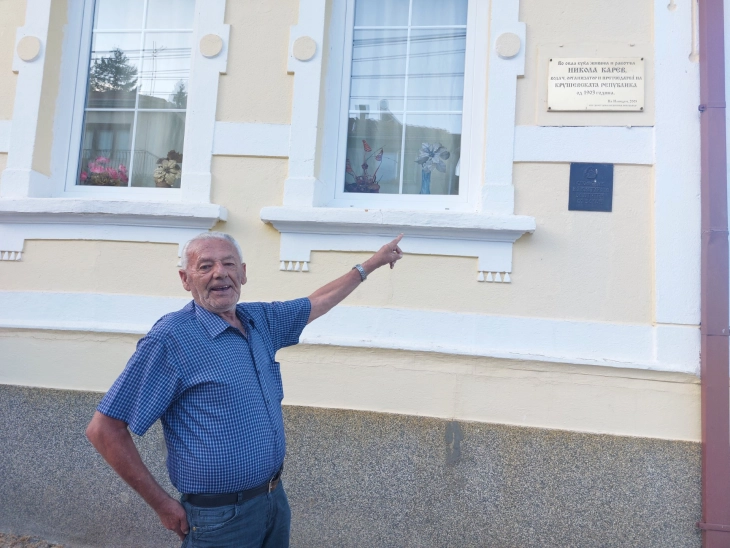
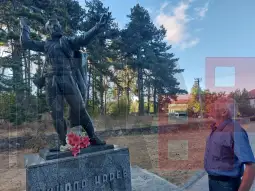
Right in front of the memorial to Nikola Karev at Gumenje is the house of Karev. There are several families with this last name.
78-year-old Trajko Karev shared his story about his famous grandfather with joy and pride.
"All my life I have heard about it from my grandfather Petrush, Nikola Karev's oldest brother. I know all about the Ilinden Uprising, about my grandfather who was the president of the Krushevo Republic. I also vividly remember the relocation of his remains to the Makedonium in 1953," Trajko Karev said.
Orphaned at eight years old, he spent a lot of time with his grandfather Petrush, he said.
"For seven years, day and night, I was with my grandfather Petrush," he said, adding that he had happily listened to all of his grandfather's stories and remembered them.
"My grandfather Petrush was a living Ilinden revolutionary," he said.
Petrush Karev, who lived to 95, showed his grandson the sites where the uprising happened.
"He died in 1963, when I was 14. I remember him carrying a walking cane in his right hand and holding my hand with his left hand," Trajko Karev said, standing in front of the Nikola Karev memorial.
According to his grandfather's stories, Nikola Karev was a charming, charismatic and handsome man.
Trajko Karev notes that, at the Smilevo Congress, Nikola Karev and Hristo Uzunov were against the early uprising. But they were outvoted. Still, Nikola Karev started preparing all villages for the uprising. He organized them via letters.
"The night of Aug. 1, at midnight, he organized the attack on the Krushevo barracks while the bells tolled. But all of it began a quarter to midnight," Trajko Karev said.
Nikola Karev was completely devoted to the Republic. He had also predicted the time of the Turks' revenge. This is why the headquarters put 22 sacks of flour and three sacks of salt at the Pavle Cheshma area; so the people would not suffer from hunger.
Trajko Karev said it was not true that Nikola Karev's mother's name was Marija. Her name was Petkana and she was from the Krushevo village of Saint Mitrani.
He recalls a story in which Nikola Karev had injured his left arm when using a chainsaw in Sofia, during the time he was Hristo Uzunov's apprentice after the uprising. This, decades later, had proved crucial to determining that the bones found in the Kochani area were Nikola Karev's, so they could be relocated to the Makedonium tomb.
Trajko Karev personally witnessed the burial of Nikola Karev's remains at the Makedonium in 1953. He was nine at the time. The first remains were not his grandfather's.
"I remember as if it were yesterday," Trajko Karev says. "My grandfather Petrush bought two packages of lokoum. For the dead people's souls. In the meantime, in front of the Krushevo museum, his sister Tana, who was also Nikola Karev's sister, had put out a cauldron to wash Nikola's bones. As she was washing the skull, my grandfather Petrush stopped her and said, 'Tana dear, this is not my brother. He had a small head and he was handsome. Let me see the left arm bone.' Chaos broke loose. The police were there as well."
The bone did not have the bone spur that Nikola Karev got as an apprentice in Sofia, Trajko Karev said.
The bones were taken back to Lajchani near Kochani. An old man known as Uncle Tozo told them where Nikola Karev was buried. Then Petrush confirmed that those were Nikola Karev's bones.
"The bones were transferred to a coffin. But there was risk in transporting the bones. Because they were being transported in a simple wheelbarrow. But it all turned alright in the end," Trajko Karev said, deep in thought as if he had gone back in time.
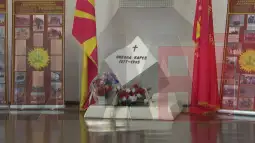
The Karev family, according to Trajko Karev, had been persecuted. But their biggest hurt was that Nikola Karev had been erased from the national anthem. To this day, he said, no historians had answered his question about what Nikola Karev had done wrong to be erased from the anthem.
"This is what the times were like. But we have respect, here in Krushevo. Every day I am greeted by Krushevo people, we talk, have coffee and reminisce. Krushevo cannot live without our Ilinden memories. Nor can we live without the heroism of Krushevo," the Ilinden Republic president's grandson said.
Photo: MIA


