State Statistical Office marks 80 years

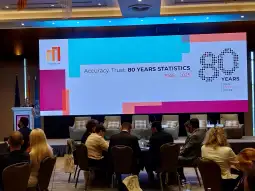
Skopje, 2 June 2025 (MIA) – Statistics are the mirror of reality in a modern and transparent society, they foster civic participation, public accountability and social dialogue. Without reliable and independent data, there is no true democracy, speakers highlighted Monday in Skopje during a formal academy marking 80 years since the founding of the State Statistical Office and 25 years of collecting gender-disaggregated data.
Director of the State Statistical Office, Dejan Stankov said that for eight decades, official statistics have gone beyond administrative use, they reflect our economic and demographic evolution and our broader social progress.
“The founders of official statistics showed total dedication to building the first statistical programs, creating methodologies, and gathering data to help the state make informed and responsible decisions,” Stankov said.
He noted that a major turning point came in 1951 with the establishment of the Statistical Office, followed by the first Law on Statistics in 1961, which laid the legal groundwork for future development.
Stankov added that after the country’s independence in 1991, the Office became the primary authority for official statistics. Since 1997, under the Law on State Statistics, it has also coordinated the national statistical system.
“From manually collected data to digital platforms. From printed yearbooks to open-access databases for all citizens – the evolution of official statistics has been remarkable. Looking back on eight decades of committed work, we can proudly say that official statistics have become a pillar of public trust and a key driver of development,” Stankov said.
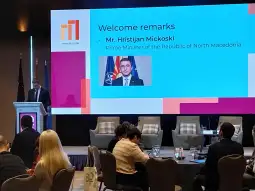
Prime Minister Hristijan Mickoski, in his address at the event, stated that Macedonian statistics are largely aligned with European statistical practices and international standards.
“These 80 years are not just history, they represent a tradition of professionalism, credibility, and public service, forming the foundation of our country’s democratic and institutional development. In a modern and transparent society, statistics are a mirror of reality. They are a tool for analysis, a basis for planning, and a guide for creating effective and accountable public policies. Through accurate, reliable, and timely data, institutions can make decisions that truly address the needs of citizens,” Mickoski said.
Mickoski highlighted that the data produced by the State Statistical Office are official, high-quality, and internationally comparable, making the institution a key source of information in the country.
“By implementing the National Strategy for Development of Statistics, ensuring financial stability, investing in IT infrastructure and human capital, and cooperating with European institutions, we are working to maintain the independence, modernity, and professionalism of the Statistical Office,” he said.
He added that this institution holds particular importance in the negotiation process with the European Union, where statistics play a key role in measuring progress and assessing reform processes.
The UN Resident Coordinator in North Macedonia, Rita Columbia, emphasized that employees working in statistics play a vital role in society.
“Your commitment to becoming leaders in advancing statistics in line with community development does not go unnoticed. Today, we celebrate each one of you and express our gratitude for the incredible work you do, which contributes to the country's development. You play a vital role by providing the government and all stakeholders with essential tools for evidence-based planning. The objective monitoring and evaluation of the data you collect are crucial for ensuring transparency, informed decision-making, accountability, and optimal use of resources,” Columbia said.
The Head of Cooperation Section at the EU Delegation, Steffen Hudolin, stated in his address that for North Macedonia, reliable, timely, and high-quality statistics are essential on its path toward EU membership.
“Statistics are much more than just numbers. They are the language of informed decision-making, a way to understand societal needs, economic potential, and the challenges that must be overcome. Alignment with EU legislation is an important endeavour necessary for harmonizing standards and practices across various domains, where statistics play a critical role,” Columbia added.
Photo: MIA


