White House official: US tariffs on EU imports to be 15%
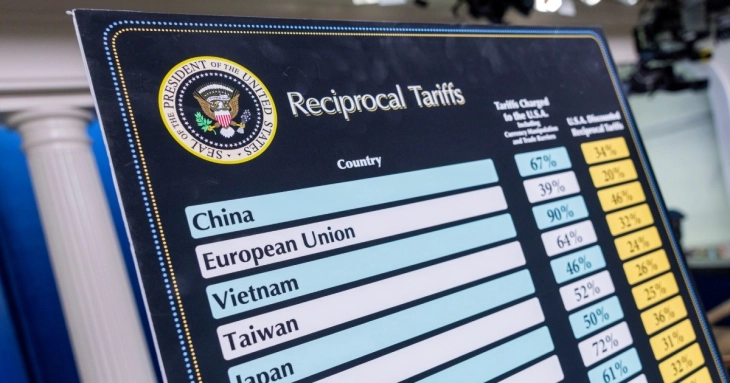
Washington, 23 February 2026 (dpa/MIA) — A 15% tariff will be imposed on EU imports into the United States following the recent Supreme Court ruling on tariffs, a senior White House official said Monday.
The basis for the new rate is the global tariff decree signed by US President Donald Trump in the wake of the top court's ruling, the official said.
"This is, however, only temporary as the administration will be pursuing other legal authorities to implement more appropriate or pre-negotiated tariff rates," the official said.
"Until then, we expect all countries to continue abiding by their trade deal commitments on reducing trade barriers and other concessions, which have not changed."
On Friday, the Supreme Court dealt a heavy blow to Trump's trade policy, ruling that the legal basis used for many of the tariffs imposed on almost all the country's trading partners was unjustified.
Soon after the ruling was announced, Trump said he would impose worldwide import tariffs of 10% to the US, citing a different legal basis. On Saturday, he raised the duties to 15%.
The rapidly changing trade conditions have caused uncertainty for businesses around the world, as well as for governments, many of which had previously negotiated separate trade deals with Washington.
Earlier Monday, the European Parliament delayed voting on the implementation of the EU-US tariff deal which was agreed last summer.
The chairman of the parliament's international trade committee, Bernd Lange, argued that Brussels wanted "clarity from the United States that they are respecting the deal" in the wake of the Supreme Court ruling.
European Commission President Ursula von der Leyen and US President Donald Trump agreed in August that there would be a maximum tariff of 15% for most EU imports into the US.
The deal has to be approved by the European Parliament, but that process has now been postponed.


