UN marine protection conference kicks off in Nice, France
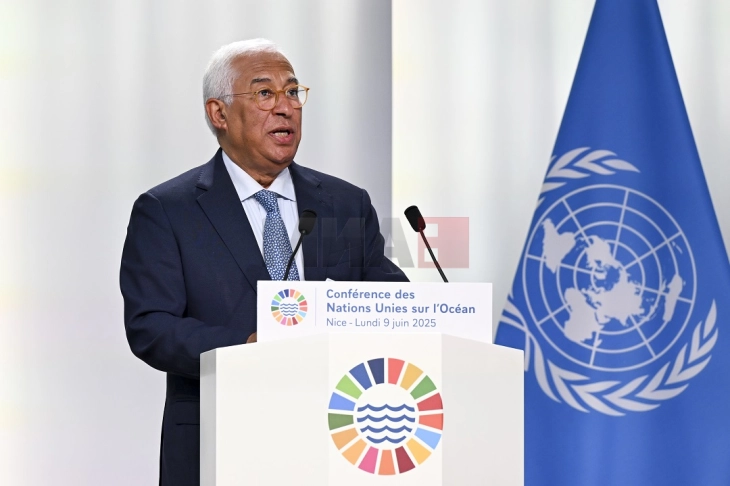
Paris, 9 June 2025 (dpa/MIA) — The third United Nations Ocean Conference opened Monday in Nice with the aim of pushing forward efforts to safeguard the world's oceans by 2030, with designated protected zones, an end to illegal fishing and bold steps to free the oceans from plastic.
To take a deep dive into how to achieve these and other self-imposed goals, representatives of 130 countries, along with scientists and environmental activists, have gathered at the five-day conference in the French coastal city.
Key topics on the agenda include tackling plastic pollution, expanding marine protected areas in international waters and debating the controversial extraction of raw materials from the deep sea.
French President Emmanuel Macron urged immediate action to protect the world's oceans. "We need swift action, not retreat," he said during his opening speech.
France — the world's second-largest maritime nation after the United States — is also pushing for progress on binding international agreements to safeguard the high seas.
Co-hosted by Costa Rica and France, the conference is aiming to to come closer to the 60 ratifications needed for the key High Seas Treaty to come into force. So far, 32 countries ratified the agreement, which was adopted in June 2023 and aims to protect ocean's biodiversity in areas beyond national jurisdiction.
The first two meetings were held in New York in 2017 and Lisbon in 2022.
The event is expected to conclude Friday with the Nice Action Plan, a package of voluntary commitments made by participating nations.
Why the ocean is so important
The oceans cover more than 70% of the Earth's surface and play a key ecological and economic role. They are crucial to the climate system and are home to an enormous diversity of species.
They absorb huge amounts of the heat generated by the increase in greenhouse gas emissions. More than 3 billion people are estimated to depend directly on the oceans for their livelihoods.
The average temperature of their waters has risen significantly in recent years and they became considerably more acidic.
Living coral reefs lost around half of their area since 1870. In addition to climate change, the oceans suffer from overfishing and pollution.
UNOC: Protection of the high seas
A key focus of the conference is the High Seas Treaty (also known as the BBNJ Agreement) — a landmark global agreement adopted in 2023 to protect marine biodiversity in international waters, which cover up to 70% of the world's oceans and have long lacked regulation.
The treaty outlines rules for assessing environmental risks of ocean-based activities and paves the way for creating marine protected areas.
The goal is to protect at least 30% of the world's oceans by 2030 — a major leap from the current 8%. To take effect, the treaty must be ratified by 60 countries — another 28.
While some campaigners doubt that the threshold will be reached during this conference, France hopes it can still be achieved by the end of the year.
However, the states already want to make concrete preparations for implementation — for example by designating protected areas.
The fight against plastic
Participants also hope to enhance protection against plastic waste. In August, the international community will meet again in Geneva to negotiate a binding plastics agreement to end the littering of the oceans.
No agreement was reached during negotiations in South Korea at the end of last year. Despite diverging positions, the hope in Nice is to pave the way for productive talks in Switzerland.
Deep sea mining
Many countries favor a precautionary pause in deep-sea mining, in which so-called manganese nodules in particular are mined on the bed of the high seas.
Studies have shown the great dangers of mining for the ecosystems there.
The International Seabed Authority will meet this summer to discuss a globally accepted set of rules for deep-sea mining. The UNOC in Nice could also send a signal for these negotiations.
The fact that the United States is considering deep-sea mining in international waters is currently a cause for concern.
Will anything concrete be decided in Nice?
Several announcements are expected in Nice, such as an inventory of marine pollution. Above all, the Nice Action Plan — a list of voluntary commitments by individual countries — is to be finalized.
According to Greenpeace, however, the draft falls far short of expectations, is too vague and makes no mention of a pause in deep-sea mining nor of a reduction in plastic production.
The environmental group OceanCare is also skeptical about the achievements of UNOC. It is calling for a commitment to stop exploring for oil and gas fields at sea and to move forward on decarbonizing shipping with measures such as a reduction in speed.
UNOC host France has expressed satisfaction with the draft action plan but concedes that it falls short of what the most proactive and motivated states want to achieve.


