Trump says agreement reached with China on rare earth exports
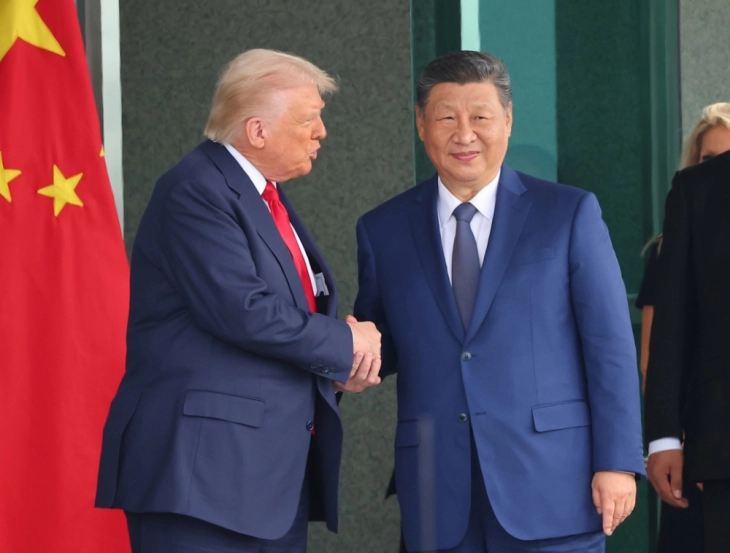
Gyeongju, 30 October 2025(dpa/MIA) - US President Donald Trump on Thursday said he reached an agreement with Chinese President Xi Jinping in the dispute over China's export controls on rare earths.
Trump said the obstacles had been removed and that the agreement would initially apply for one year. "We have a deal. Now, every year, we'll renegotiate the deal," he told reporters on Air Force One on his way from South Korea back to the United States.
He did not provide further details about the terms of the deal and only said the term "rare earths" will "hopefully disappear from our vocabulary for a little while."
Trump cuts fentanyl tariffs on Chinese goods
Trump also announced that tariffs on Chinese goods related to fentanyl will be reduced to 10% from 20%, effective immediately. As a result, tariffs on Chinese products will now amount to 47% instead of 57%, according to Trump.
The US president has repeatedly blamed China for contributing to the fentanyl crisis in the United States. Fentanyl, a highly addictive synthetic opioid up to 50 times stronger than heroin, can be deadly in just a few milligrams, according to US authorities.
Washington has long accused Beijing of not doing enough to stop the supply of substances used to produce the synthetic opioid.
In February, the Trump administration had imposed additional tariffs on Chinese products, citing the fentanyl crisis as justification.
Strict export controls for seven rare earths
Ahead of the talks, Beijing was already expected to suspend the planned expansion of export controls on five additional rare earths from November 8. Since April, Chinese firms have faced a complex approval process to export seven key minerals.
China said the restrictions aim to prevent materials crucial to the defence industry from being used for unauthorized military purposes.
China dominates global production and processing of rare earths, giving it leverage in trade talks with the US. These minerals, and the magnets made from them, are used in smartphones, TVs, electric motors, semiconductors and turbines.
While rare earths are abundant in China, extraction is costly and environmentally damaging, requiring significant water and energy. Its low-cost supply has given China near-monopoly control of the global market, though Brazil, India and Australia also produce rare earths.
Photo: EPA


