New medical training programs to be introduced to improve national health care
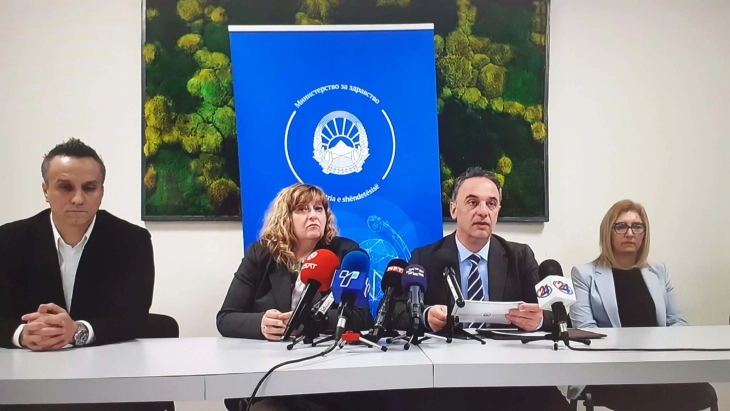
Skopje, 16 April 2026 (MIA) — The country is overhaulng its medical training system to improve the quality of patient care nationwide, Minister of Health Azir Aliu told a press conference Thursday held to announce the new specialization and subspecialization programs.
According to Aliu, research shows that current medical specialists are often too narrowly trained, leaving them unprepared for practical work, particularly in emergency and intensive care.
This has put immense pressure on major hospitals because regional clinics cannot handle complex cases, he said. Additionally, the current system does not align with modern European standards.
As a result, the reform will focus primarily on internal medicine and general surgery. In internal medicine, the ministry is adding more practical training for emergency and intensive care.
Aliu said point-of-care ultrasound training will now be a standard skill for every internist. The plan also defines specific medical procedures doctors need to master and gives specialists more independence in their daily work.
"Our goal is to train internists who can independently manage complex and emergency cases at regional hospitals, with a broader understanding of various organ systems," Aliu said.
For general surgery, the government is launching a five-year curriculum that follows European standards and features a broad, multi-system approach.
The new program improves how patients are triaged and creates a stronger foundation for further subspecialization.
"The goal is to create flexible and capable surgeons with the skills to meet the actual needs of hospitals, particularly those in rural areas," Aliu said.
He expects the changes to lead to better health care access, reduce the number of patients sent to major city hospitals and increase patient safety.
He said medical students will have a 36-month window to transfer from their old specialization program to a new one.
Existing specialists can take one-year "bridge" programs to align their skills with the new standards.
New two-year programs will also be available for those looking to upgrade their specialized training.
"Our strategic direction is a return to broad basic specializations, with subspecialization being an upgrade," Aliu said.
He added that this was more than just an educational change; it is a systemic reform to ensure medical staff are ready to respond whenever and wherever they are needed most.
The new specialization model will start on Sept. 1, the minister said in response to a reporter's question.
"All students in their third year of specialization or below may transfer to the new curriculum. Those beyond their third year will complete the existing program," Aliu said.
He said the program aims to help surgeons and cardiologists work together as a team. He also said the plan was to get more medical workers to move to and work in smaller towns.
The deans of the Skopje, Tetovo and Shtip medical faculties — Svetozar Antovikj, Nevzat Elezi and Katerina Zlatanovska — joined Aliu and Doctors Chamber president Kalina Grivcheva Stardelova at the press conference to discuss the importance of the reform. mr/


