National Bank: Reducing fees for payments within country and in SEPA
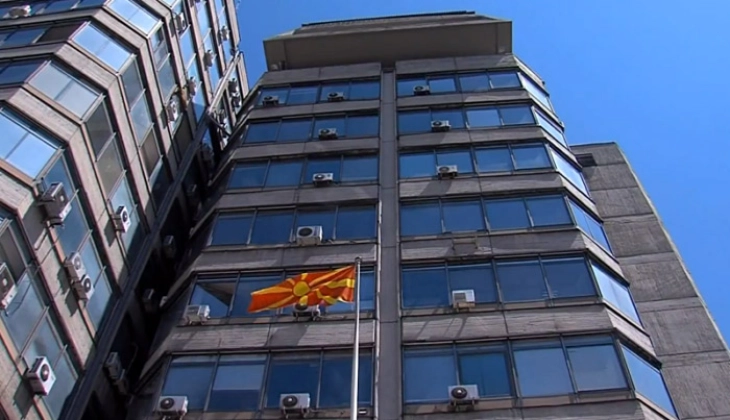
Skopje, 16 July 2025 (MIA) - As part of its efforts to modernize the payment system and encourage electronic payments, the Council of the National Bank has adopted a decision introducing a completely new model for bank fees in executing and settling payments within the Macedonian Interbank Payment System, the National Bank said in a press release Wednesday.
According to the National Bank, the model is based on the principles and practices of the central banks within the Eurosystem, involving fixed and predictable fees based on transaction volume. This creates room to simplify and reduce the fees that banks charge clients for processing electronic payments through the country's payment systems, the Bank said.
“Additionally, the Council introduced a fixed fee structure for payments made by government bodies in euros to SEPA countries: €3 per transaction for electronically initiated orders and €5 for paper-initiated ones. Compared to variable fees tied to transaction amounts under complex correspondent arrangements with foreign banks, these fixed and low fees are expected to result in substantial savings for the country when conducting payments to European countries,” the National Bank said.
The decision, made during Tuesday’s session of the Council, was adopted in the context of the country’s accession to SEPA and the ongoing process of aligning with the European standards. It lays the groundwork for broader cost reductions in cross-border euro payments, both from the National Bank for government bodies and from banks for their clients.
“The National Bank will continue to actively work on simplifying and lowering fees for payments within the country and to SEPA countries, with the goal of providing better services to citizens and a favorable business climate for companies,” the National Bank said.
At the same session, the Council of the National Bank adopted the risk report for the banking sector for the first quarter of 2025.
“In a context of stable economic growth, mildly accelerated inflation, and increased external uncertainty, the banking sector maintained its stability. Credit and deposit activities showed solid year-on-year growth, while indicators for solvency, liquidity, and credit portfolio quality remain favorable. Profit growth in the banking system slowed compared to the same period last year, mainly due to reduced interest income. The National Bank will continue its cautious policy approach, considering global risks and remaining dedicated to maintaining the stability of the banking system,” the National Bank said.
Photo: MIA Archive


