Greece extends COVID-19 travel rules for a week
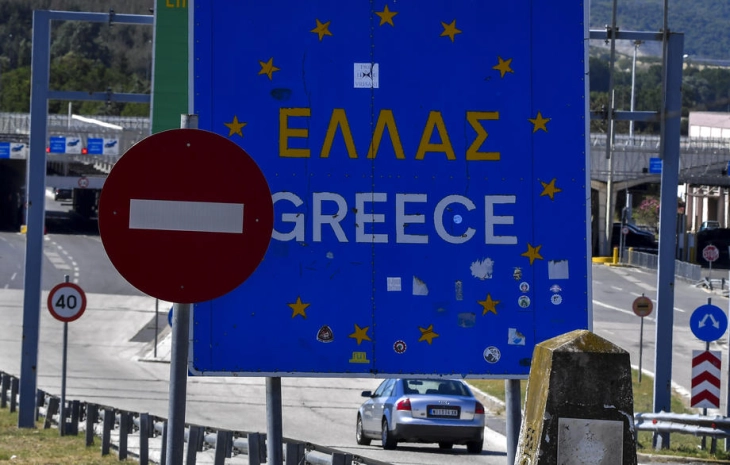
Athens, 3 September 2021 (MIA) – Greece has extended the COVID-19 entry rules for another week, which include travelers to provide mandatory vaccination certificate, negative PCR test results or proof that they’ve previously had COVID-19, and to fill out online the PLF (Passenger Locator Form), MIA’s Athens correspondent reported on Friday.
In line with the new ministerial decision, which entered into effect as of September 3, the rules will remain in force until September 10, 2021.
Travel rules changes introduced last week, according to which people arriving in Greece from 16 countries, including North Macedonia, who don’t have a vaccination certificate or proof that they had recovered from COVID-19, meaning who are travelling with only negative PCR or rapid test results, will have to test negative to the coronavirus upon entry into the country, have also been extended.
Vaccinated travelers have to wait 14 days after being administered the second vaccine dose in order to enter Greece. The vaccination certificate must be issued either in Greek, English, French, German, Italian, Spanish or Russian by a public institution, and contain information such as: full name (as stated in passport), type of vaccine and number of doses, as well as dates when they were administered.
Alternatively, those presenting negative PCR test results need to have the test done 72 hours prior to entering Greece, whereas those presenting negative rapid test results need to have the test done 48 hours prior to entering Greece. In both cases, tests need to be done at a pre-approved private or national lab. Results must be either in Greek, English, French, German, Italian, Spanish or Russian, and also contain the passenger’s full name as stated in the passport.
Changes were made in regard to this measure last week, introducing mandatory testing at the Greek border for nationals who want to enter the country only by presenting negative PCR test results.
Besides Macedonian nationals, those from Egypt, Albania, Argentina, Bulgaria, Brazil, Georgia, Cuba, the United Arab Emirates, India, China, Libya, Morocco, Pakistan, Russia and Turkey will also be tested at borders.
Mandatory testing does not apply to passengers who provide valid vaccination certificates or proof that they had recovered from the virus in the past six months.
In addition, passengers can also enter Greece by presenting proof that they’ve previously had COVID-19, including PCR or antibody test results, with the document issued 30 days after the first positive test results and valid up to 180 days. Tests need to be done at a pre-approved private or national labs and results must also be either in Greek, English, French, German, Italian, Spanish or Russian.
The European digital COVID-19 certificate is yet another alternative option to enter Greece.
The travel rules apply to persons over 12 years of age.
Moreover, prior to the visit, travelers must fill out online the PLF (Passenger Locator Form), available at www.travel.gov.gr. They will receive confirmation containing a QR code, which is considered a necessary document for entering the country.
All arrivals can be subject to random rapid testing when entering Greece. If they test positive, they must remain in mandatory quarantine for 10 days, unless they have been fully vaccinated at least 14 days prior to arrival, in which case they will be put in isolation for 7 days.
On the last day of the isolation period, passengers must undergo another PCR test.
Travelers who have had close contact with a person infected with COVID-19 can return to their country the same or following day, if they test negative twice in 24 hours and wear N95 face masks while travelling.
In case they stay in Greece, but are not vaccinated, nor have had COVID-19 in the past six months, they must stay isolated for 14 days, counting from the last time they were in contact with the infected person, or for 7 days and undergo another PCR test on the last day.
If they are vaccinated or have had COVID-19 recently, they won’t be put in isolation, but must undergo mandatory PCR test upon entry into Greece.
Fines for breaking the measures included in the ministerial decision stand between EUR 500 and 5,000.
The border crossings Evzoni (Bogorodica), Niki (Medzhitlija) and Dojran, between North Macedonia and Greece are open for passengers 24 hours a day.
According to the decision, tourists are required during their stay to abide by measures and restrictions enforced in Greece.


