EU pushes ahead with plans to use Russian assets for Ukraine
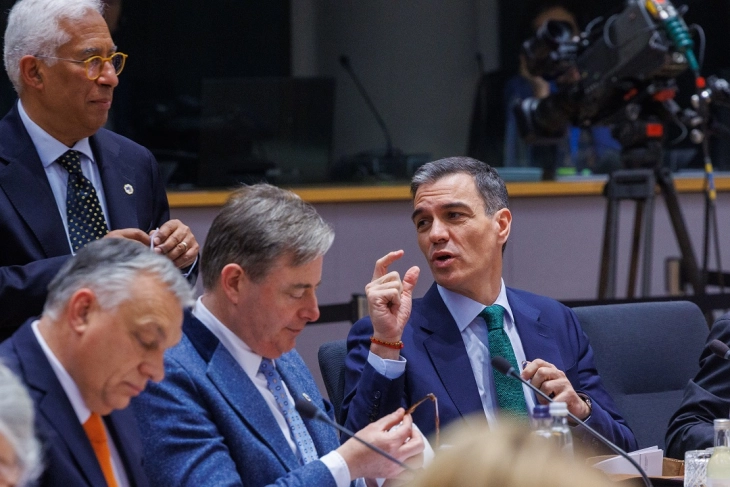
Brussels, 24 October 2025 (dpa/MIA) - The European Union on Thursday has pushed ahead with plans to use frozen Russian state funds for Ukraine as leaders tasked the European Commission with presenting options to address Kiev's financial needs.
"European leaders committed to ensure that Ukraine's financial needs will be covered for the next two years," said European Council President Antonio Costa after the EU summit in Brussels.
"Russia should take good note of this. Ukraine will have the financial resources it needs to defend itself against Russia's aggression," he added.
EU leaders in Brussels discussed plans to provide Kiev with up to €140 billion ($162 billion) to finance its military and meet other financial needs in the coming years.
At the request of Belgium, where most of the assets are held, the commission is also to develop other possible options to provide Ukraine with large-scale financial support for the years 2026 to 2027.
"We had a good discussion on the reparations loan to be financed with immobilized Russian assets, and it allowed us to identify points we still need to clarify," said European Commission President Ursula von der Leyen.
"Then indeed, we will come back with the different options," she said.
Ukrainian President Volodymyr Zelensky, who attended the summit as a guest, said the meeting brought "good results."
Belgian concerns
After the meeting, Belgian Prime Minister Bart De Wever said he still has several concerns.
The main issues revolve around the questions of how such a loan could be set up in compliance with international law, how other countries holding frozen assets could be convinced to get on board and how to make the money available immediately if needed, he said.
The EU has been one of Ukraine's biggest supporters since Russia's full-scale invasion of Ukraine started over three and a half years ago, with financial and military assistance totalling close to €180 billion.
The bloc has been under increasing pressure to provide additional aid to Kiev after US support has dwindled under President Donald Trump.
Many EU countries, however, are faced with bleak domestic economic outlooks, rising deficits and heavy debt burdens, prompting the suggestion to potentially tap into Russia's immobilized state assets.
According to initial plans, Russia would only get the money back if it pays reparations after the end of the war against Ukraine. In case the frozen Russian funds have to be unexpectedly released, EU countries would provide guarantees.
So far only the interest on the frozen money is being used to support Ukraine in its defence against Russia.
Merz welcomes move while industry warns of risks
German Chancellor Friedrich Merz, one of the proponents of the initiative, said he expects the commission to come forward with the different options ahead of the next EU summit in December.
"We are increasing the pressure to get the Russian side to agree to negotiations so that the guns finally fall silent in Ukraine," Merz said.
"Ukraine needs reliable prospects, especially when it comes to military equipment. We Europeans must send this signal of strength now," he added.
German businesses however have criticized the plans amid fears that such a move would endanger European money frozen by Moscow, saying that such a step would have costly consequences, especially for Germany.
"Germany has invested in Russia like no other country. Therefore, it has the most to lose in the planned utilization of Russian central bank funds for arms purchases in favour of Ukraine," Matthias Schepp, chairman of the German-Russian Chamber of Foreign Trade (AHK) told dpa on Thursday.
Schepp said that assets totalling over €100 billion are at risk.
MIA file photo