EU introduces new border control system
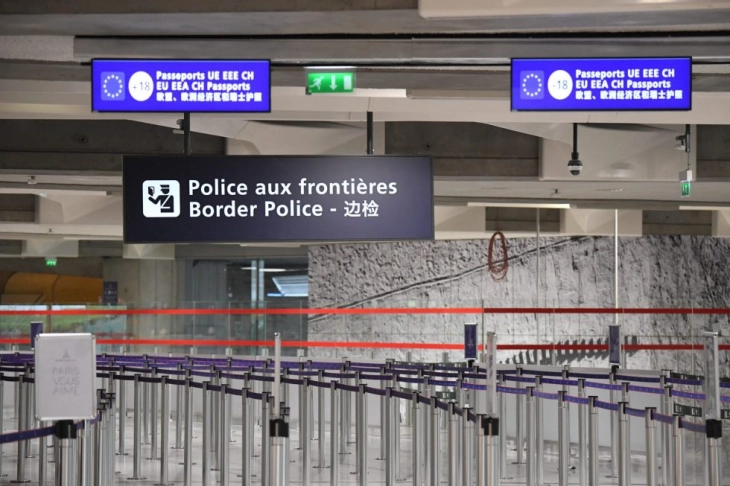
Zagreb, 11 October 2025 (Hina/MIA) - The European Union is launching its new Entry/Exit System, which digitally records the entry and exit of third-country nationals, replacing the previous manual passport stamping process.
Croatia's introduction of the new border control system for nationals from non-Schengen countries could cause delays at crossings with Serbia, Bosnia and Herzegovina, and Montenegro.
The EES electronically logs the time and place of entry and exit for third-country nationals with short-stay permits, calculates their remaining authorised stay, and collects biometric data - a facial photograph and prints from four fingers of the right hand. Children under 12 will be exempt from fingerprint collection.
For subsequent entries, identity will be verified by comparing the stored image with the photograph in the travel document, speeding up border checks, Croatia's Interior Ministry says.
The system will be implemented at all international border crossings, including those temporarily designated for international traffic under agreements with Bosnia and Herzegovina.
Initially, registration for the EES will be available for at least four hours a day, gradually extending to 24-hour operation over a six-month period.
Dedicated EES lanes will be provided for third-country travellers, but during periods of heavy traffic the system will operate across all lanes.
Alongside the EES, Croatia will also introduce a National Facilitation Programme for frequent cross-border travellers from third countries who pose no security risk. Participants will be able to cross more quickly, as repeat entries will not require new biometric data collection. Instead, the system will compare the passport photo with the one already stored in the EES.
At airports in Zagreb, Split, Dubrovnik, Pula, Zadar and Rijeka, EES self-service kiosks will be available for travellers entering the Schengen area for the first time who do not yet have an EES record. The process involves scanning a travel document, collecting facial and fingerprint biometrics, and completing a short questionnaire, with support in 15 languages.
The introduction of the EES is expected to increase processing times at road border crossings, particularly for first-time travellers who must exit their vehicles to create an EES record and verify their identity. However, the Interior Ministry expects waiting times to decrease once the system becomes routine and more travellers have their EES records established.


