EP enlargement report: Bilateral issues must not be used to block EU accession process
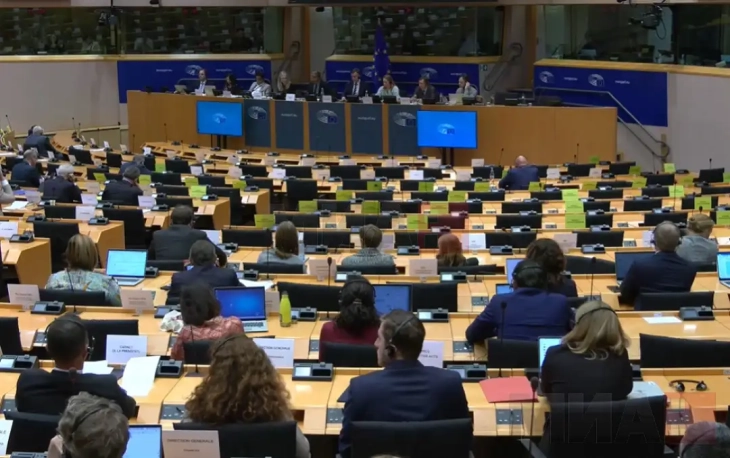
Brussels, 20 November 2025 (MIA) - Outstanding bilateral issues between EU and non-EU countries should be resolved bilaterally and must not be used as leverage to block the accession process of candidate countries, states the European Parliament’s Draft Report on the EU Enlargement Strategy, which also notes that some of the aspiring members have held the status of candidate country for many years.
“Enlargement is one of the EU’s strongest foreign policy and geopolitical tools and remains a key driver of long-term security, peace, stability and prosperity in Europe based on shared democratic values, and it represents a historic opportunity with significant socio-economic, political and security advantages for both the EU and the enlargement countries,” the report states.
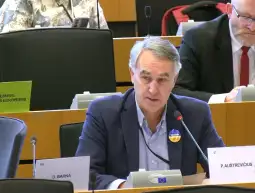
The document was presented before the EP’s Committee on Foreign Affairs (AFET) on Thursday, with rapporteur Petras Auštrevičius, a Lithuanian liberal MEP, stressing that the EU must have a strategy for enlargement and must not allow the process to be held hostage by any member state.
Auštrevičius noted that the candidate countries are undergoing a process of transformation, adaptation, and comprehensive reforms on their accession path, adding that the progress of each country should be judged based on individual merit.
“The countries involved in the enlargement are not a buffer zone for the EU, they are future members of our shared Union and they need practical adaptability, individual integration, and structural financial assistance. I firmly believe that every candidate country committed to membership can achieve its goal through reforms and with our support and become a full-fledged member of our community,” Auštrevičius said.
On the other hand, the Lithuanian MEP said the EU must maintain the functionality of the accession process by moving to making decisions through a qualified majority, and it must do so timely and transparently.
The draft report stresses that accession to the EU must always be a merit-based process and that each applicant must be assessed on its own merit in terms of meeting the Copenhagen criteria, ensuring alignment with the EU acquis and fulfilling all additional conditions set out in the enlargement framework.
“The rule of law, democratic reform, media freedom and respect for fundamental rights, including the rights of minorities, must remain at the forefront of the enlargement process, with judicial independence, the fight against corruption and the inclusion of and support for civil society being crucial preconditions for progress along the path to EU membership, particularly at a time of rising authoritarian tendencies,” the report states.
The report describes enlargement as being of the utmost strategic importance for the EU in the face of Russia’s full-scale war of aggression against Ukraine and other common geopolitical challenges, requiring a long-term political democratic vision and bold decisions.
“Enlargement is a win-win for both current and future member states,” it says, adding that enlargement will strengthen European security and that the future of the Western Balkans, Ukraine and Moldova lies within the EU
According to the document, enlargement is an essential anchor for fostering regional reconciliation and stability, increasing resilience and protecting candidate countries from malign foreign interference.
“Maintaining and enhancing enlargement policy is indispensable for the EU’s influence in the region and beyond, especially at times of heightened geopolitical instability,” the report adds.
The report encourages candidate countries to continue to resolutely implement the necessary reforms and ensure alignment with the EU’s Common Foreign and Security Policy as “an essential indicator of a candidate country’s commitment to the EU’s fundamental values and principles and its readiness for future membership”.
The document notes the process of preparing for enlargement should proceed in parallel within both the EU and candidate countries and it reiterates its call for the EU institutions to undertake the necessary reforms to ensure that the lack of such reforms does not delay the accession of new member states.
“[The EP] repeats its call for the EU’s capacity to act to be enhanced through the introduction of qualified majority voting (QMV) in areas relevant to the accession process by abolishing, in particular, the requirement for unanimity in the intermediate steps in the enlargement process when deciding on the start of the accession negotiation process as well as the opening and closing of individual negotiating clusters and chapters,” says the report.
The report notes regret that the overuse of unanimity in the intermediate steps in the enlargement process has repeatedly slowed down EU enlargement, and recalls that Article 49 of the Treaty on the European Union enables a move to QMV without requiring Treaty changes.
“Acknowledges the importance of the broad application of gradual integration into EU common policies, such as the single market, for candidate countries that make substantial progress on EU-related reforms. While gradual integration of candidate countries can help them implement the EU acquis and thus make the transition towards EU membership smoother, it cannot replace full membership of the EU. Reiterates its suggestion that the enlargement process should be supported by the early involvement of candidate countries in the functioning of the EU institutions, e.g. through observer status in relevant bodies and institutions, including Parliament,” the document adds.
The MEPs who participated in the debate following the presentation of the report expressed support for the enlargement process by upholding the principle of individual merit for each candidate country and the established membership criteria. Some MEPs also emphasized the need to change the decision-making process by shifting from consensus to qualified majority voting in certain phases of the negotiations, in order to prevent specific countries from blocking and delaying the negotiation process.
MEPs have until December 2 to submit amendments to the draft report, after which it is likely to be put to a vote at the Committee meeting scheduled for January 15, 2026. If everything proceeds according to plan, the document could be adopted at the European Parliament’s plenary session in February.
Photo: Screenshot


