Croatia to open modern waste management plant with EU support
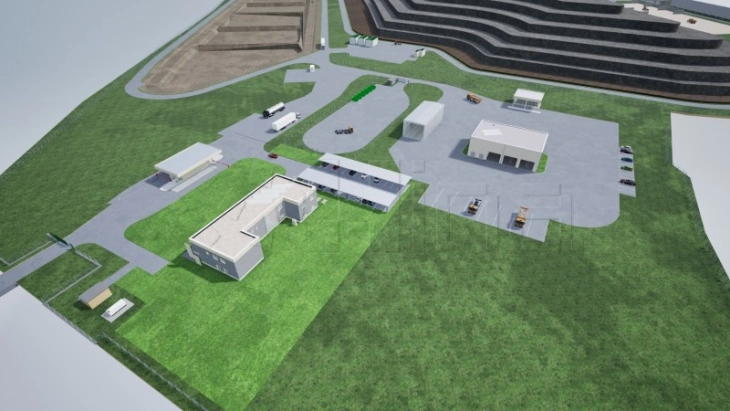
Zagreb, 15 September 2025 (Hina/MIA) — Croatia's new regional waste management center Piškornica near Koprivnica is due to start operating in 2027, handling mixed waste from four counties with a closed mechanical-biological treatment system, maturation halls and biofilters designed to prevent unpleasant odors and reduce the environmental impact.
The Slovenian company Kostak is building the facility, which will process waste from Krapina-Zagorje, Varaždin, Međimurje and Koprivnica-Križevci counties.
Project manager Nikola Martinaga told Hina that, unlike Kaštjun near Pula, which has been plagued by stench and uncontrolled waste build-up, Piškornica will use a different system. Delays in the project have allowed for the application of more advanced technology. The EU, which is partly financing the project, requires state-of-the-art technology to be installed in all new or planned regional centers.
The center will not have an open-air bioreactor landfill but a covered maturation hall, keeping all processes indoors. Waste will first be shredded and metals removed, then dried in sealed boxes to below 25% moisture, reducing odors.
The biodegradable fraction will be composted to 95% degradation, producing a compost-like material for disposal at a non-hazardous landfill.
Leachate, or wastewater, will undergo two levels of treatment, first on-site and then at Koprivnica’s wastewater facility.
Air quality will be continuously monitored, with biofilters and gas scrubbers neutralising odors.
According to Martinaga, Piškornica will cut CO2 emissions by an amount equivalent to removing 50,000 cars from the roads in the four counties and will concentrate waste treatment at one controlled location.
Koprivnica-Križevci County generates 40,000 tons of municipal waste annually, equivalent to 110 tons a day, or 4.8 tons every hour.
The plant is designed to operate for 30 years, initially receiving 30,000-35,000 tons annually. EU directives coming into force between 2035 and 2040 will require landfill disposal to be reduced to under 10% of total municipal waste.
The facility will employ about 80 people, including staff at transfer stations.
However, Croatia still lacks sufficient incinerators or industrial users for the high-calorific RDF fuel extracted from waste, meaning a dedicated energy recovery plant will eventually be needed, preferably in cities where heat and steam could be used for industry or district heating.


