Ambassador Burshakov: Kazakhstan to vote for new Constitution on March 15 to become presidential republic with influential unicameral Parliament
Skopje, 10 March 2026 (MIA)
Violeta GEROV
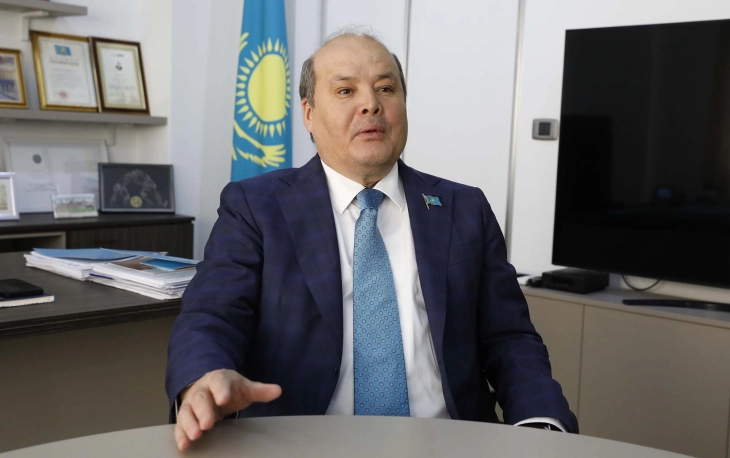
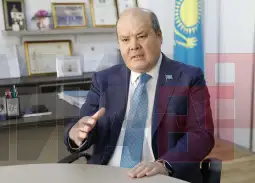
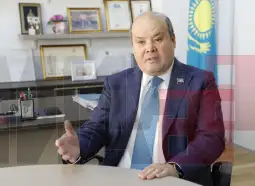
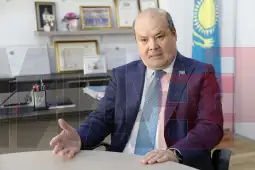
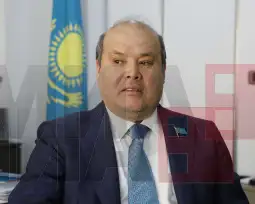
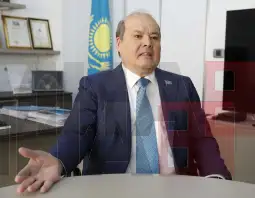
Kazakhstan on March 15 will hold a referendum to adopt a new Constitution to finally part with a super-presidential form of government and moving to a presidential republic with an authoritative, influential unicameral Parliament. Independentce, soveregnity, territorial integrity of the country as well as the citizens’ interests and rights lie at the heart of the draft national constitution, says the Ambassador of Kazakhstan, Satybaldy Burshakov, in an interview with MIA.
“Kazakhstan has entered a period of profound transformation. We are carrying out large-scale transformations that will affect the fate of the whole country. In January 2026, President Tokayev outlined the main parameters of the constitutional reform, which subsequently formed the basis for the draft of the new Constitution. The reform marks an evolution from point-by-point amendments to a comprehensive update of the Basic Law reflecting changes in the political system, the model of public administration and values,” he says.
A broad public discussion has been ongoing for more than six months, notes Burshakov, and since then, numerous proposals and amendments discussed in the society, in the expert community, social network, press.
In January, a 130-member Constitutional commission was formed to systematize proposals.
“The commission carefully reviewed and consolidated all proposals and introduced a number of amendments. Importantly, the commission’s work was open. It is important to note that never before had reforms in Kazakhstan been discussed so comprehensively and covered so widely live. As President Tokayev stressed, against the backdrop of profound geopolitical, geo-economic, and technological shifts, it is vital to update national goals, values, and principles and reinforce them at the Constitutional level,” says Burshakov.
Among the institutional innovations is the creation of a unicameral Parliament (Kurultai) consisting of 145 members elected by proportional representation for a five-year term, while simultaneously expanding its powers. The position of Vice President is being established in the executive branch, which will represent the Head of State in cooperation with domestic and foreign socio-political, scientific and educational circles.
“The President of Kazakhstan has repeatedly stressed that the reform is not limited to changing the text of the Constitution, but is aimed at a real transformation of public relations and increasing the effectiveness of the state. Thus, the referendum will become a starting point for the practical implementation of the principles laid down in the new Constitution,” says the Ambassador.
Read below Ambassador Satybaldy Burshakov's full interview with MIA
Kazakhstan is undergoing constitutional reforms. What is the goal of these reforms? What are the main changes of the reforms that will be introduced?
Kazakhstan has entered a period of profound transformation. We are carrying out large-scale transformations that will affect the fate of the whole country. In January 2026, President Tokayev outlined the main parameters of the constitutional reform, which subsequently formed the basis for the draft of the new Constitution. The reform marks an evolution from point-by-point amendments to a comprehensive update of the Basic Law reflecting changes in the political system, the model of public administration and values.
In fact, a broad public discussion on this issue did not begin yesterday but has been ongoing for more than six months. Since then, numerous proposals and amendments discussed in the society, in the expert community, social network, press.
This January a 130-member Constitutional commission was formed to systematize proposals. The commission carefully reviewed and consolidated all proposals and introduced a number of amendments. Importantly, the commission’s work was open. It is important to note that never before had reforms in Kazakhstan been discussed so comprehensively and covered so widely live.
As President Tokayev stressed, against the backdrop of profound geopolitical, geo-economic, and technological shifts, it is vital to update national goals, values, and principles and reinforce them at the Constitutional level.
Political reforms of recent years allow us to see that Kazakhstan is parting with a super-presidential form of government and moving to a presidential republic with an authoritative, influential Parliament.
The proposed amendments to the current Constitution will make it possible to redistribute powers, strengthen the balance in the system of checks and balances, and, most importantly, increase the effectiveness and sustainability of all political institutions.
The draft of the new Basic Law embodies fundamental principles and values aimed at consolidating the nation and ensuring the progressive development of Kazakhstan. It establishes such foundations as building a Just Kazakhstan, the rule of law, as well as the absolute priority of protecting the rights and freedoms of citizens. The Constitution redefines the long-term development guidelines of the state, consolidating education, science, culture and innovation as strategic priorities. This reflects a conscious transition to a development model based on human capital rather than solely on raw materials.
In general, the draft of the country's new Basic Law incorporates all the fundamental principles and values aimed at consolidating the people and ensuring Kazakhstan's dynamic progress. It outlines fundamental principles such as a Just Kazakhstan, Law and Order, and the absolute priority of protecting the rights and freedoms of citizens.
In the field of social policy, the Constitution defines marriage as a voluntary and equal union of a man and a woman, which serves as a measure to protect traditional values and strengthen legal guarantees for women. The State undertakes obligations to protect traditional cultural values and to counteract the imposition of destructive behaviors. At the same time, the principles of independence, sovereignty and territorial integrity of the country remain unshakable. The unitary character, territorial integrity and form of government of the State are fixed as unchangeable.
The updated Constitution strengthens the formulations concerning the foundations of unity and social harmony, introducing the concept of creative and responsible patriotism.
Thus, the draft of the new Constitution is a conceptually updated, professionally prepared document that has undergone comprehensive expert review.
The final decision on the adoption of the new Constitution will be made by the citizens of Kazakhstan on a nationwide referendum on March 15, 2026.
What will be the next step after the March 15 referendum, when the Constitution will be adopted?
The referendum will be a key event determining the future vector of the country's development. This is an important stage that marks the transition to a new constitutional model in Kazakhstan. The only issue on the ballot is the adoption of the new Constitution in its entirety, which underlines the integrity of the proposed changes. If the draft is approved by the people, the new Basic Law will enter into force on the day of the official publication of the results of the referendum.
If the Constitution is adopted, large-scale legislative work will begin to bring all the country's legislation into line with the new constitutional norms. This will require the development and adoption of a whole package of new laws and amendments to existing codes governing the activities of government agencies, the rights and freedoms of citizens, as well as economic processes. The Parliament and the Government will begin to implement those provisions that require detailed legislative regulation. Following these procedures parliamentary elections to elect members of newly established Kurultay will be held and consequently new Kazakh government will be formed after the elections.
The President of Kazakhstan has repeatedly stressed that the reform is not limited to changing the text of the Constitution, but is aimed at a real transformation of public relations and increasing the effectiveness of the state. Thus, the referendum will become a starting point for the practical implementation of the principles laid down in the new Constitution.
Will this new constitution change the course of the country?
The new Constitution, of course, is designed to consolidate and deepen the country's development course. This is not about changing foreign policy orientations or a geopolitical vector, but about a fundamental transformation of the domestic structure and social contract. According to experts, the new Basic Law reflects the realities of an already established state, whose citizens are focused on creation and progress. The document is intended to create a legal framework for building an effective and fair model of interaction between the state, society and business.
Amendments to the Constitution consolidate fundamentally new accents in public policy. As I have already noted, for the first time at the highest level, the development of human capital, education, science and innovation are recognized as strategic areas of government activity. This means a long-term investment priority in the development of the nation's intellectual potential and the technological renewal of the economy. At the same time, the mechanisms for protecting property rights are being strengthened, while understanding that the use of property should serve the interests of the whole society.
Thus, the new Constitution becomes a high-quality «roadmap» that forms value orientations - creative patriotism, hard work, knowledge and environmental culture determining the long-term development of the country. The foreign policy course based on multi-vector approach and pragmatism remains unchanged, but now it is supported by a powerful internal transformation aimed at strengthening sovereignty and improving the well-being of citizens.
About the economic development of the country. Kazakhstan in 2025 succeeded to 6.5% GDP. What are the prospective for 2026? What are the challenges?
Kazakhstan is demonstrating strong economic growth, becoming one of the leaders among the countries of Eastern Europe and Central Asia by the end of 2025. According to the World Bank, the republic's GDP growth reached 6% by the end of the year, which is almost seven times higher than in a number of neighboring countries and confirms the country's status as one of the main growth engines in the region. Thanks to this dynamic development, Kazakhstan's gross domestic product has exceeded the threshold of $300 billion (in per capita terms exceeded $15,000) for the first time in history, which is a historic achievement for the Kazakh economy.
According to international experts, the prospects for 2026 are characterized by a phase of stabilization and moderate growth after a period of rapid recovery. The World Bank forecasts GDP growth of 4.5%, reflecting the transition to a more balanced development model. The Government of Kazakhstan remains optimistic and continues to work towards achieving ambitious targets, focusing on qualitative growth, diversification and sustainability of the economy.
Kazakhstan continues to rank among the world’s 50 largest economies, according to the projections released by the International Monetary Fund (IMF) in October 2025.
The IMF estimates that Kazakhstan’s nominal gross domestic product (GDP) will reach $320 billion in 2026, keeping the country firmly within the global top 50. Kazakhstan remains the only Central Asian state represented in this group.
Among the key tasks and challenges facing the country in 2026 is the need to balance between stimulating economic activity and containing internal risks. Particular attention is paid to preventing credit overheating, controlling rising prices for housing and communal services, and ensuring stable growth rates in the non-resource sector. Globally, we are closely monitoring the slowdown in demand in the eurozone and trade restrictions that may indirectly affect export opportunities, and we are adapting our economic policies to these conditions.
Large-scale digitalization and widespread use of Artificial Intelligence have become a national priority in Kazakhstan. E-government is an important pillar of our national development strategy. Around 90% of public services are already digitalized. The strategic goal is to further diversify our external trade and economy, making it more inclusive and resilient, as well as to transform Kazakhstan into a fully digital power within the next three years.
2026 has been declared the Year of Digitalization and Artificial Intelligence Development in Kazakhstan.
What are the main projects of Kazakhstan? Where money will be invested?
Kazakhstan's investment policy is aimed at implementing major infrastructure and social projects that will drive high-quality economic growth and improve the well-being of the population.
According to international analytical organizations, in 2025 Kazakhstan attracted about $19 billion in new investments, which accounted for the overwhelming share of all investment projects in North and Central Asia. A significant part of these funds was allocated to the real sector of the economy.
The main investments are aimed at the development of industry and the manufacturing sector, the agro-industrial complex, infrastructure and transport.
In this context, priority attention is given to the development of the transport and logistics industry as a key factor in unlocking the transit potential of the country located at the crossroads of the most important trade routes between Europe and Asia. We are implementing a comprehensive modernization program for roads, railways, and port infrastructure, which will significantly increase capacity and shorten cargo delivery times. Special importance is attached to the development of the Trans-Caspian International Transport Route (TITR or «Middle Corridor»), which opens up new opportunities for diversifying cargo flows and strengthening ties between the continents.
Kazakhstan aims to become a major transit and logistics corridor connecting Asia and Europe, while building a modern economy grounded in technology, innovation, and human capital.
Strengthening Kazakhstan's transit and logistics potential is a task of strategic importance. The country is located in the center of the Eurasian continent at the intersection of most transit highways. There are 12 international transport corridors: 5 by rail and 7 by road, through which up to 85 percent of overland cargo transportation between China and Europe is carried out.
The launch of the Trans-Caspian International Transport Route (TITR), or the Middle Corridor, and active participation in the «North-South» project clearly demonstrate our competitiveness in global logistics chains.
In 2024, freight traffic along this route increased by 62%, reaching 4.5 million tons. We are working with foreign partners to establish a unified long-term tariff along the corridor. This will increase freight traffic to 10 million tons.
In the energy sector, Kazakhstan maintains its status as one of the guarantors of global energy security, being a major supplier of oil, uranium, and other energy resources to world markets. Simultaneously, we are implementing a strategic course towards a «green» transition, actively developing projects in renewable energy and hydrogen technologies to meet the challenges of the new era.
In parallel, work is underway to upgrade the airport infrastructure of the country's largest cities, which will contribute to the growth of passenger and tourist flows. An important tool for achieving these goals is international cooperation with leading financial institutions, such as the Asian Development Bank, which implements large-scale initiatives in the transport sector. These projects are designed not only to strengthen Kazakhstan's position as a reliable transit hub, but also to create new jobs, stimulate the development of related industries and contribute to the sustainable economic development of the country.
The Astana International Financial Center (AIFC) played an important role in attracting investments in 2025. For the last year about 6 billion USD was raised through its platform, and the number of registered companies increased by more than a thousand.
A significant event of 2025 was also the Kazakhstan Global Investment Roundtable (KGIR-2025), which resulted in the signing of investment agreements worth about 7.5 billion dollars. The agreements covered projects in the energy sector, industry, agriculture and logistics.
In parallel, investment projects in the field of tourism and regional development are being implemented, including the creation of tourist and recreational complexes in the eastern and southern regions of the country, which contributes to the diversification of the economy and the development of small and medium-sized businesses.
The major investment projects implemented in 2025 have confirmed the effectiveness of Kazakhstan's chosen strategy to attract capital and develop non-resource industries. Investments have become an important factor in economic sustainability, technological renewal and increasing the country's competitiveness in the international arena.
Regarding Astana-Skopje bilateral relations. What can we expect in this area? What are the perspectives? Any official high-level visits in close future?
Kazakhstan considers North Macedonia as an important partner in the Balkans, and we are committed to strengthening and expanding our bilateral cooperation in every possible way. We are delighted to maintain regular contacts and open dialogue with North Macedonia at the highest level. We are proud to announce that last year we have reached important joint results. Working visit in May 2025 to Astana by Madame President Siljanovska-Davkova to attend the Astana International Forum and to meet President of Kazakhstan Kassym-Jomart Tokayev, as well as visit by Foreign Minister Timcho Mucunski in June 2025 are evidence of those results. The energy cooperation as a key issue was discussed during the visit of Minister of Energy Madame Sanja Bozhinovska to Kazakhstan when she met her Kazakh counterpart. Regional cooperation was established between Kumanovo municipality and Karagandy city when Mr Mayor Maxim Dimitrievski visited Kazakhstan in May 2025.
We see prospects for cooperation primarily in the trade, economic and investment spheres, where there is significant untapped potential for increasing mutual trade and implementing joint projects. We believe that, as a rule, the intensification of direct contacts between the business circles of the two countries is the most effective tool for finding new points of contact and launching mutually beneficial initiatives. The creation of the Kazakh-Macedonian Business Council is seen as a key practical step in this direction.
In this regard, we have high hopes for deepening cooperation between the Chambers of Commerce, which have the necessary authority and expertise to bring business communities closer together and facilitate the implementation of joint projects. Kazakhstan, with its rich natural resources and developed agricultural sector, offers its Macedonian partners ample opportunities to establish long-term cooperative ties.
In addition to the economy, important attention is paid to the humanitarian sphere and the simplification of contacts between citizens. During the meeting of the leaders, an agreement was reached to consider issues of visa facilitation, which should give additional impetus to tourist, business and cultural exchanges. We look forward to intensifying the bilateral dialogue in the near future and confirm our readiness for substantive work in all areas of mutual interest.
Photo: Slobodan Gjurikj


