Skopje isn't just the boulevards and buildings, it's the citizens first and foremost, Shukova tells MIA

Skopje, 19 August 2025 (MIA) – Kaja Shukova, SDSM’s candidate running for Skopje mayor, reveals in an interview with MIA that she nominated herself in the party because she believes she has the experience to restore the capital where it should be. The first thing she would do if elected, as some of her election rivals, would be to clean Skopje, starting from the downtown. She will reintroduce the rapid bus transport (BRT) project after making some adaptations. Her election promises also include the completion of the amusement park, reduction of water consumption, introduction of anti-pollution measures, etc.
“One thing is for sure – Skopje isn’t just the boulevards or the buildings. Skopje, first and foremost, is the residents. If this becomes our starting point, I believe we can do a lot. Also, the energy between the city, the city administration and the entire infrastructure, both administrative and technical, between the city of Skopje and the residents has to move. There has to be synergy, meaning service providers to give services to others, and the others to feel the benefits from the services, because the city is in the service of residents. We mustn’t forget this. The city is here for the residents, the public enterprises operate for the residents and, in turn, the residents have to treat public good responsibly,” Shukova says.
Speaking to MIA, the Skopje mayor candidate announces a positive and open campaign to seek voters’ support.
“I’ll run a positive campaign, I don’t know how to behave differently. I’ve held offices before. Those who have worked with me know that I don’t attack, that I won’t say ‘I’m going to win in the first round’. You won’t hear me using such a narrative. I’m seeking voters’ support, from those who perceive me as professional that will offer good solutions for the city, who will be in communication with the residents. I will behave as I have so far. In fact, I wouldn’t have entered the race if I hadn’t had professional capacity,” Shukova says.
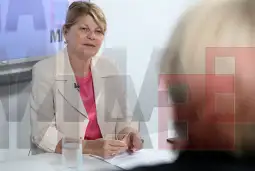
What’s your vision for Skopje?
First of all, thank you for the invitation and the opportunity to inform the residents about my plans for Skopje. Firstly, we should restore elementary standards and elementary values in Skopje. I think we should start from there. One thing is for sure – Skopje isn’t just the boulevards or the buildings. Skopje, first and foremost, is the residents. If this becomes our starting point, I believe we can do a lot. Also, the energy between the city, the city administration and the entire infrastructure, both administrative and technical, between the city of Skopje and the residents has to move. There has to be synergy, meaning service providers to give services to others, and the others to feel the benefits from the services, because the city is in the service of residents. We mustn’t forget this. The city is here for the residents, the public enterprises operate for the residents and, in turn, the residents have to treat public good responsibly.
A video was posted on social media revealing a huge pile of trash in river Vardar. The residents are responsible for this, not the local or central authorities, for throwing trash in the river. River Vardar should be both cleaned and an example to be set. If elected, how would you react in this situation?
We have a shared responsibility. Local authorities must react, specifically Communal Hygiene public enterprise. Trash has to be cleaner. I’ve always urged, including when I served as environment minister, that each and every citizen, myself included, has to be responsible not to throw trash everywhere. But the city of Skopje is affected by this situation that I call lethargy. Seeing that the authorities in charge of cleaning the city do not function, the residents become lethargic, saying why should I be the responsible citizen when the institutions are not doing their job.
I believe this should stop. Once the residents see that the system is functioning, that the city is clean and beautiful, I believe they will think twice. There are measures that can be taken. We should be more aware, primarily the local authorities and the enterprises that should be providing the services.
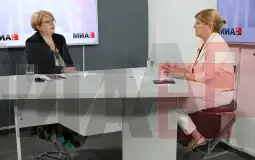
Mrs Shukova, the local election campaign will start in over a month since the elections are scheduled on October 19. Are you preparing for the campaign? Can you reveal any details from your program?
We have been working on the city of Skopje program and the program for the other municipalities for a while now. This time, we kickstarted a systemic process that already lasts for 3,5-4 months. Most of the programs for the smaller municipalities are being finalized as the program for Skopje is being worked on in parallel. The basis for the Skopje program was laid several months ago. In fact, I told the public that I nominated myself when SDSM had issued a call. I presented then a framework for the program that we are now finalizing. It’s more than a vision, you present the main processes that need to be implemented in the city. Also, several capital projects will be included. One of those is the BRT project. It’s a project that was, unfortunately, scrapped four years ago. It is completed, the paperwork has been completed and finances have been secured. We think the project with some modifications should be implemented. We’re looking into it now because a lot has changed in the past four years.
What other capital projects are included in your program?
When it comes to children, it’s the Luna (Amusement) Park. We plan on expanding it a bit to introduce a center that will offer entertainment for young people as well. We’re still working in the concept.
What’s very important to me is that there are several pillars that we are working on. One pillar is, of course, infrastructure, including overground and underground, hygiene, water supply, sewages, etc. We’re dealing with water losses in Skopje.
Let’s talk about education and culture. I’ve already made contacts with members of the independent scene in Skopje. At the moment, I think the independent scene is virtually non-existent and we mustn’t forget that Skopje will be the city of culture in 2028. MKC [Youth Cultural Center] will be our focus. It should be given back to young people and the independent scene.
There are several pillars, which will be “enriched” with several measures and activities as well as projects that should be implemented.
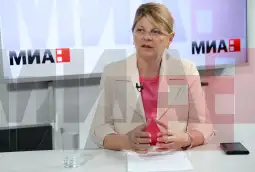
What about hygiene and how the Communal Hygiene enterprise operates?
Its equipment is outdated, including vehicles, garbage bins and containers. We’ll introduce a concept called circular economy. It means we should use waste as resource. If used circularly, the amount of waste that should be taken to landfills in the end will be smaller than what we’re seeing today. Today in Skopje, we’re probably throwing nearly 94-95 percent of waste, which is not done in the European countries. They are throwing 20,30 or 40 percent of waste. Waste in major capitals is a resource. We should use it as a resource here as well. In order to do it, we should provide the citizens with adequate infrastructure. There should be adequate bins, containers to select waste and vehicles should be provided that would collect plastics, paper and communal waste according to an agreed timetable.
Fines have been introduced in some countries.
It’s true, people can be fined for mixing waste. That’s why we should provide infrastructure. In addition to bins and containers and garbage collection vehicles, there have to be capacities near Skopje to process them. They could be owned by private companies.
I hope I will introduce it if I’m elected. For example, there are construction waste crushers. We see what is happening, how many small illegal landfills are forming in the municipalities and around the city of Skopje. That can be a rich resource, let's say, for the construction industry. It is mostly used as a material for street the construction. The city administration can finance something like that to have a raw material that can be offered to construction companies. There are many models. We don't need to invent anything new; everything has been invented, we just need to apply it and, in my opinion, we need to set it up systematically. It should be known exactly who, why, how and when.
I cannot skip the issue of pollution. Even now, in the summer, the air quality alert appears in some of the neighborhoods in the city of Skopje. Do you have a solution for this?
Yes. That part of the program has already been completed. It is one of my specialties, as you know I am still at the Ministry of Environment. It includes a larger set of measures that can be applied. I have been sharing these measures with the public and with all interested parties in recent years. But they need to be implemented a little more specifically.
A lot of work must be done in terms of the energy efficiency of buildings, especially public buildings. The City and the municipalities in the city have a duty to make public buildings energy efficient. First, that means using much less energy, and second, using ecological energy. It has been done for years. I am not saying that we will start from scratch, but more needs to be done. Heating with oil, coal needs to be replaced because these methods are still used in certain institutions, most of which are visited by children, the youngest, kindergartens, schools, cultural centers... That is one of the things that must be done. Second, spraying water on the roads used to be a regular and common practice in Skopje, those born and raised here know that. This does not allow dust or PM particles to rise into the atmosphere, or into the space in which we breathe the air, and in this way pollution is reduced. Not to mention the state of the public transport. I take buses and see the state they are in. Many of them emit exhaust fumes while running.
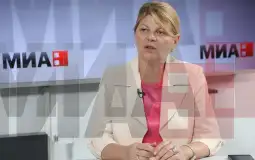
You mentioned the BRT project. Four years have passed. Does that project need adaptation?
It will probably need some adaptations. We will need to think about it. We have been looking into the BRT project very carefully, so we will need to think about whether we will also need to intervene in Kisela Voda, because the implementation of the BRT project there requires the most interventions. In fact, as far as I know, the BRT project there will also require demolition of existing buildings, and a lot of time and money will be spent, and we need to think about whether it is efficient from any aspect, from the aspect of time and from the aspect of spending a lot of funds. After all, that BRT transfer station could end in the center, and there we could continue with ecological buses. We cannot go only with the BRT. We must also go with eco-buses, some of which were purchased several years ago, while in these four years, I believe, there are only six eco-buses that were purchased through the EU-funded Clean Air Program, implemented through the Ministry of Environment. So, of course, transportation will be combined, but one thing is clear: it must be fast, it must be efficient, it must be environmentally friendly. There will be no compromise on that.
When you take the bus, do people approach you?
It's happening more and more now.
What questions do they have for you? What do they expect? Do they give you any ideas?
There are all kinds of comments. Now, of course, those on the opposite side can sometimes probably have some unpleasant comments, but I simply tell them that everyone has the right to run, everyone has the right to say their own thing. I am entering this race because I believe that I have enough professional experience and I can help the city. In fact, I wouldn't have entered the race if I hadn’t had this experience behind me...
Indeed, my work experience goes back more than 25 years, primarily in environment and communal services and municipalities. I know the state concept, the regional and municipal concepts. And, topics are discussed. Some want to discuss more, some extend congratulations, some say "why bother". Some exchange ideas. I have to say they are mostly from the older generation, especially retirees. I don't mind, I talk to them both on the bus itself and at the bus stop, a good idea can come at any time and in any place. If the city needs it, if it's okay, then why not, we will communicate it and maybe one day we will implement it.
As woman running for Skopje mayor, do you feel a lot of pressure, given that our society is more inclined towards male politicians and given the experience of female politicians before you, even though you are also former Minister of Environment?
I don't feel pressure because once I decide to embark on a process, I do so with all my capacity. I know of and have witnessed many unpleasant situations involving women. I must say that I have never had such an experience so far. I am not saying that one or the other is to blame, but I think society should hold women in slightly higher regard, especially given all the other responsibilities they have as women, in fact, in the family, especially with children, and if they decide to invest in politics and invest their professional capacity, whatever it may be, in helping the state, I think that everyone else should have more regard for women, if they have decided to embark on such a thing.
I personally do not feel pressure because I embark on this whole story very openly. I am always available to the public and to everyone. I am known for never hanging up on anyone or never failing to respond to a call. I am available to respond to texts as well. Now I have quite a few new friends on social networks. Even just a like on their post is enough to show appreciation. People gave me a lot of congratulations on joining the race. I believe a thank you goes a long way for someone who has paid attention and wanted to communicate with you.
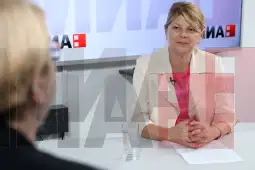
What are your expectations from the elections? what are your expectations from the campaign, and what kind of campaign will you offer?
Above all, I’ll run a very positive campaign. I don’t know how to behave differently. I’ve held offices before. Those who have worked with me know that I don’t attack, that I won’t say ‘I’m going to win in the first round’. You won’t hear me using such a narrative. I’m seeking voters’ support, from those who perceive me as professional who will offer good solutions for the city, who will be in communication with the residents. I will behave as I have so far. In fact, I wouldn’t have entered the race if I hadn’t had the professional capacity.
My family background probably gives me the courage as well. My father worked for twenty years in urban planning in the country and in Skopje. He eventually retired from the Ministry of Transport and Communications. As a family, we have often engaged in discussions, we knew what was happening, what the processes were. My grandfather was one of the secretaries in the City of Skopje in the 80s. As a girl, I remember visiting his workplace very often. None of that is unfamiliar to me. I spent most of my professional life in administration, although I am a technologist by vocation, in the food industry, and sometimes I very much regret not returning there. I worked for a period before starting in administration.
I believe I know the system well. I know what the weaknesses are. I know what needs a little more push, what needs a little more attention. I've worked on a lot of capital projects. They are always, unfortunately, with a lot of problems, but there is a solution to everything if everyone sits down at the table and says ‘this is the problem, let's find the solution now’. If we keep silent about the problems, we will never find the solution.
Given that you were a minister from the ranks of SDSM, and all, relatively speaking, positive experiences, and everything related to your work, will this candidacy mean drawing more votes for your party, considering the defeat in the last parliamentary elections?
The question is not whether it is just my candidacy. The citizens are already seeing that the projects promised by VMRO-DPMNE are not being implemented, when we talk about the central level, and a large part of the projects and what they promised in the 2021 local elections. We see that a large part of the projects have not been implemented. The City of Skopje is a striking example because most of the decisions that were not made, the programs and activities of the City were boycotted by the VMRO-DPMNE advisory group. I believe that the citizens will recognize in us and in me someone who will really commit themselves to the work.
Even as a minister, I cooperated with everyone. I cooperated with our mayors and I cooperated with the mayors of VMRO-DPMNE and DUI, and VLEN. Whoever called me, wherever there was a problem, I always responded. Even in my party, people sometimes say to me ‘why do you respond, they are not our mayors.’ But I say we have to overcome that mindset. Citizens live in every municipality. After all, in Skopje, we are a multicultural environment and citizens of every religion live in Skopje and many men, women and children, and what I want to say is that everyone should be treated the same and everyone deserves equal attention.
What would be the first decision you make if elected mayor?
The first decision will definitely be to clean the city. I think it is something that must be done as quickly as possible. It cannot be done in 24 hours, nor in a month, it will certainly take several months. My proposal would be to start from the downtown. I think that is the image of our city. We mentioned the Kanal5 TV journalist who filmed those reports. We know that this is where it is most critical. Starting from the downtown, and then spread towards the other parts of the city. We have to start somewhere. Communal Hygiene cannot clean the city at all locations at the same time. We have to go sector by sector. There are people who know that.
So, cleaning the city will be the first thing, and then of course we will work on other things that will be part of our program. For instance, for me it is very important to reduce water consumption in Skopje. In simple terms, 100 liters of water enter the water supply system of the City of Skopje, and 40 to 45 liters of water reach the end users. That means we have about 60 percent water loss. The old infrastructure, I don't know why it hasn't been repaired, is one thing, and the illegal connections are another. We will have to fight that too, because if you want to have an efficient system, you have to detect all the problems, and solve all the problems systematically in the water supply system.
In a few sentences, who is Kaja Shukova in private?
I am a graduated engineer-technologist. Mother of two daughters. One is 28 years old, the other is 21 years old. I have a husband, Goran, and the youngest member of the family is a Maltese named Dina. I am communicative, I like to talk to people, I like camping, I am not one of those conformists who like to go to hotels, to fancy beaches. I like camping because I like having neighbors around me with whom I want to communicate at any time and I hope that the citizens will see in me an open person, who accepts ideas, who will share knowledge, and I will ask for the support of all of them, not only for the election cycle but also in the future, so that we can clean up Skopje and restore it to the way it should be.
Elizabeta Veljanovska Najdeska
Translated by Bisera Altiparmakova - Marusic and Nevenka Nikolik
Photo: Darko Popov


