Construction of gas interconnector with Greece begins

Skopje, 9 July 2025 (MIA) – The construction has started Wednesday on the 66.7 km gas interconnector with Greece, extending from Gevgelija to Negotino, with an initial capacity of 1.5 billion cubic meters per year.
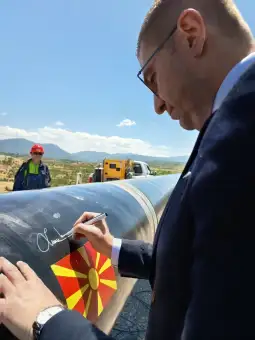
At the official launch of construction works, Prime Minister Hristijan Mickoski highlighted that the project will bring new sources of natural gas, ensure stable supply, reduce prices for citizens, enhance the competitiveness of businesses, and, as he stated, send a strong message: we are finally joining the European energy network.
The value of the project is Mden 3.7 billion (€60 million) secured with support from the EBRD, the EIB and the EU.
“This project is not a new idea, it had long been discussed, promised even, but never realized. Today’s event is not about spectacle or false promises. It’s about showing we are approaching this with responsibility, persistence, and clear intentions. The results are becoming visible. This initiative is part of a broader vision: we are connecting to the gas networks of our neighbours, which will make us a regional energy hub,” Mickoski noted.
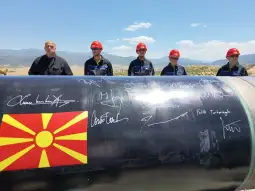
Energy Minister Sanja Bozhinovska said that the country will have a modern gas pipeline, ready for future transport of green hydrogen and with the possibility of doubling its capacity. This, she noted, means energy stability for households and competitiveness for the Macedonian industry. “We are sending a clear and strong message: Macedonia is no longer a hostage to energy dependence and infrastructure isolation,” she said.
“With the establishment of the interconnector, Macedonia becomes a fully engaged participant in the regional energy infrastructure. This paves the way for energy exports, enhanced foreign investment, and the creation of strategic partnerships. Simultaneously, we are completing all remaining formalities to bring the diesel pipeline into operation. The legal obstacles tied to customs regulations have been resolved, meaning there are no longer any barriers to its use or revenue collection. Technical inspections are currently in progress, and we expect the pipeline to be operational in the coming months,” Bozhinovska said.

She said that work is nearing completion on the gas interconnection with Serbia as well. The technical documentation is in its final stage, to be followed by the development of the construction project. According to Minister Bozhinovska, both strategic interconnectors - with Greece and Serbia - have the support of the European Commission and are part of the Action Plan for the EU Strategy for the Adriatic and Ionian Region (EUSAIR).
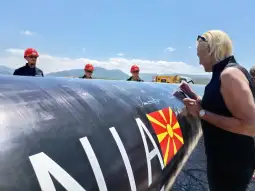
Ambassadors from the U.S., EU, and Greece, along with officials from DESFA, Srbijagas, EBRD, and EIB, attended the ceremony.
The construction of the interconnector, as noted by U.S. Ambassador Angela Aggeler, is a long-awaited project that demonstrates independence and strengthens ties in terms of energy and economic development.
“A strategic investment in security, prosperity and sovereignty. Energy diversification is essential. Regional cooperation and partnership are important. As the world’s largest producer of LNG, the United States wants our gas to soon be transported through this pipeline. We want to see economic security, safety, and regional development that this flow will bring for all of us. Partnerships with friends and neighbours have proven to be far more than bureaucratic or political maneuvers,” Aggeler stated.
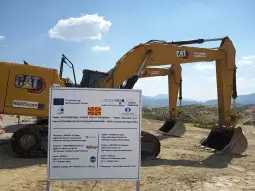
The contractor, Kumanovo-based Rapid Build, is tasked with completing the project in 22 months, with finalization expected in 2027.
Photo: MIA


