WiFi4WB initiative to provide free public internet in 64 municipalities, first network in Kochani

Kochani, 19 February 2026 (MIA) - The WiFi4WB (Wi-Fi for Western Balkans) initiative was officially promoted Thursday in the Municipality of Kochani, launching the installation of free public Wi-Fi networks in 64 municipalities across the country.
WiFi4WB initiative is part of the EU4Digital project, co-funded by the European Union and the German Government and implemented by the German Society for International Cooperation (GIZ), inspired by the EU’s WiFi4EU program, which has connected over 7.000 communities across Europe. Once fully implemented, citizens and visitors will be able to access free Wi-Fi in public spaces such as squares, parks, libraries, schools, and cultural sites, throughout North Macedonia and across the region.
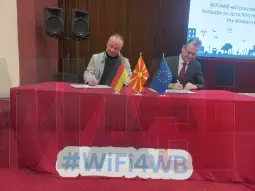
As part of the EU’s Western Balkans’ Growth Plan, the initiative helps strengthen digital connectivity and regional integration. With support from the EU and the Federal Republic of Germany, participating municipalities receive a comprehensive package that includes equipment, installation, network connection, and maintenance of Wi-Fi systems for a set period, ensuring both immediate impact and long-term sustainability.
Telecommunications operator “Makedonski Telekom” was selected through a public call to implement and maintain the Wi-Fi infrastructure, as well as to provide free internet services at designated public locations across North Macedonia.
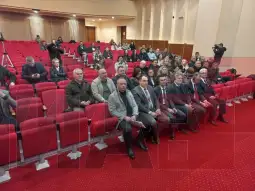
At the promotional event, Kochani Mayor Vladko Grozdanov highlighted the importance of digital connectivity for local communities, stressing that digital connectivity is a prerequisite for a modern and inclusive local development. Grozdanov added that the project promotes access to digital services, education, and public information, and enables easier internet access for citizens and visitors.
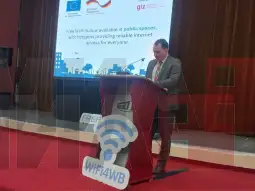
Minister of Digital Transformation Stefan Andonovski noted that the initiatives is set to provide free public internet in more than 60 municipalities in the country.
“This means free internet access in public spaces – squares, parks, libraries, schools, and cultural sites, where the citizens need connectivity most. This is not just a convenience, it is a tool for equal opportunity, for easier access to digital services and information, for supporting local businesses, for enhancing the experience of visitors, and most importantly for reducing the digital divide and fostering greater social inclusion,” Andonovski said.
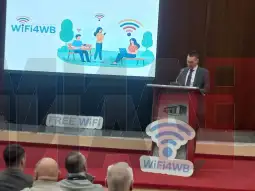
The Deputy Head of the EU Delegation in Skopje, Ben Nupnau, welcomed the launch of the WiFi4WB initiative and its role within the broader Growth Plan, noting that the European Union is investing in practical solutions that make a real difference in people’s everyday lives.
“With WiFi4WB we are providing free and secure internet access in squares, in libraries, and public spaces across North Macedonia. This is a part of our broader commitment to promoting connectivity, supporting local economies, and ensuring full inclusion of communities in the region in Europe’s digital future,” Nupnau said.
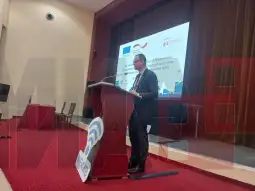
The Deputy Ambassador of the Embassy of the Federal Republic of Germany, Jan-Axel Foss, highlighted the importance of equal access to digital services, noting that free internet access in public spaces will help ensure that digital opportunities and information reach everyone, especially young people, entrepreneurs and vulnerable groups.
At the event, a Memorandum of Cooperation was signed between GIZ and the Municipality of Kochani, formalizing their cooperation on the installation, operation, and long-term maintenance of the WiFi4WB network. On this occasion, David Oberhuber, GIZ Country Director for North Macedonia, highlighted the regional importance of the initiative and its sustainable implementation model.
The WiFi4WB initiative aims to improve access to digital services, education, and public information, while supporting small businesses, enhancing the experience of visitors, and strengthening local tourism. By providing free and secure internet access in public spaces, the initiative also contributes to social inclusion and reducing the digital divide.
Photo: MIA


