Gangi for MIA: FAO’s support continues for transforming Macedonian agriculture towards more inclusive and sustainable agrifood systems

Skopje, 16 October 2025 (FAO/MIA) - Nabil Gangi, Deputy Regional Representative of the Food and Agriculture Organization of the United Nations (FAO) for Europe and Central Asia and Head of the FAO Office in North Macedonia, in an interview with MIA on the occasion of World Food Day, speaks about FAO’s eight-decade journey – from humanitarian missions to becoming a global leader in sustainable agriculture – as well as about the longstanding partnership with North Macedonia, which has lasted for more than three decades.
Every year, World Food Day reminds us of something simple but profound: food connects us all. It’s about how we grow it, share it, and sustain it – and the responsibility we carry, together, to make sure it nourishes everyone.
Observed in more than 150 countries and in nearly 50 languages, World Food Day is one of the most recognized international days on the UN calendar. But for FAO, it is more than a date. It’s a moment to come together – with partners, with people everywhere – and to recommit to our founding purpose: A World Without Hunger!
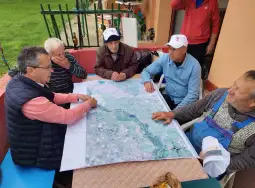
Through building more efficient, more inclusive, more resilient and more sustainable agrifood systems for all to defeat hunger, malnutrition and achieve global food security.
This year is especially meaningful as FAO marks 80 years of service. On the 16th of October of this year, in celebration of this milestone, a global ceremony at FAO headquarters in Rome takes place and the Food and Agriculture Museum and Network opens its doors for the first time as a new space to explore how knowledge, culture, and innovation shape the way we grow and value food.
Throughout October, hundreds of events will bring the message of World Food Day and FAO’s 80th anniversary to life and bring together communities all around the globe. Each one is a reminder that food is more than just human fuel. It is a foundation for peace, for dignity, and for a more just and equal future.
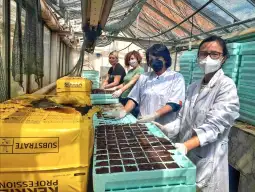
The theme this year – Hand in Hand for better foods and a better future – reflects both the urgency and the promise of collective action. Our agrifood systems face immense pressure: conflict, extreme weather, economic shocks, and growing inequality are all testing the limits of the land we farm, the water we depend on, and the biodiversity that supports our life. Supply chains remain fragile, and the impacts are felt everywhere – from global markets to family kitchens in Belgrade, Skopje, Podgorica, Sarajevo, not to mention the households of rural areas.
And behind the statistics, there are real people: parents who worry about feeding their children, the small-scale farmers whose work and livelihoods are threatened by increasing extreme weather and climate events; and the people suffering from hunger caused by conflict and violence. Decades after declaring food as a basic human right – we see up to 733 million people go hungry, while millions more cannot afford a healthy diet. At the same time, rising obesity highlights the deep imbalances in the way we produce and consume foods.
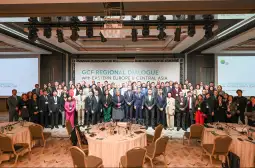
These challenges cannot be solved alone. Progress depends on what we can do together – across borders, sectors, and generations. We have to prioritize greater and more targeted investment, as well as deeper cooperation. Everyone has a role to play: governments, international organizations, farmers, researchers, businesses, and consumers alike.
As FAO and the UN family mark 80 years of service, this is a moment to reaffirm the power of collective action. The pressures are growing – but so are the opportunities for solutions. What we need is inclusive dialogue, sound policies, and decisions that are made together, with the voices of local communities, Indigenous Peoples, women, and youth at the center.
FAO’s mission remains clear: A World Free from Hunger & Malnutrition through better production, better nutrition, a better environment, and a better life – leaving no one behind or deprived of their right to food.
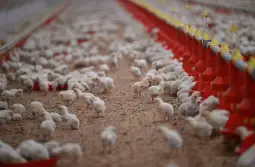
After declaring independence from the former Yugoslavia in 1991, the Republic of Macedonia became a member of FAO in 1993. Yet FAO’s presence goes back much further—from nutrition programmes in the 1950s to emergency food aid after the 1963 Skopje earthquake. How has FAO’s role evolved from those early humanitarian roots to today’s long-term development and strategic partnership?
With North Macedonia even before its official joining of FAO in 1993 our partnership had started. As early as the 1950s, FAO introduced nutrition and home economics programmes that improved family well-being. After the devastating Skopje earthquake in 1963, FAO, through its then World Food Programme, provided emergency food aid to reconstruction workers — an early example of our humanitarian mission in action. From those beginnings, FAO’s role gradually shifted from humanitarian assistance to long-term development and policy support.
After its independence in 1991, the Republic of Macedonia became a member of FAO in 1993. At that time the country faced profound political, social, and economic transitions. FAO was among the first international partners to support reforms, helping to restructure agricultural markets, strengthen food safety systems, and improve land management policies. At the same time, North Macedonia established diplomatic relations with FAO and other Rome-based food agencies, ensuring its active participation in global discussions on food security, forestry, plant health, and genetic resources, and embedding the country more firmly in international agricultural governance.
Today, FAO’s role is far more strategic and forward-looking — supporting the country in building inclusive and sustainable agrifood systems, tackling climate change, and moving confidently toward European integration and the Sustainable Development Goals. Our partnership now spans policy and institutional support, EU alignment and structural reforms, and climate action. We have helped build stronger national capacities in forestry, animal health, food safety, and agricultural policy; supported structural land reforms and rural development on the path to European integration; and advanced climate resilience through sustainable land and water management, biodiversity protection, irrigation investments, and better use of climate and weather data.
Always with a focus on smallholders, family farmers, women, and youth, FAO works hand in hand with the Government, the European Union, and other partners to mobilize climate finance, drive digital transformation, and strengthen the resilience and competitiveness of the country’s agrifood systems.
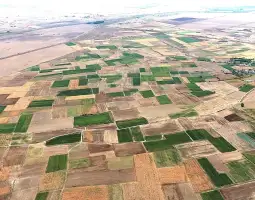
As FAO celebrates 80 years globally and over 30 years of partnership with North Macedonia, what are its key future priorities for driving sustainable development and transforming the country’s agrifood systems?
As FAO enters its ninth decade of service and over three decades of partnership with North Macedonia, our focus is firmly on the future: driving the transformation towards more inclusive and sustainable agrifood systems, while aligning Macedonian agriculture with European Union standards and the Sustainable Development Goals.
Enhancing the productivity, competitiveness, and resilience of agriculture will remain central to FAO’s collaboration with the Ministry of Agriculture, Forestry, and Water Economy and other partners. This means addressing fragmented land structures, small farm sizes, and outdated agricultural infrastructure, which have limited productivity and contributed to the depopulation of rural settlements. FAO will continue to support structural land reforms, expanding land consolidation and other land market instruments to improve farm structures, strengthen family farms, and modernize agricultural infrastructure, while promoting sustainable natural resource management and climate adaptation in rural areas.
At the same time, FAO will help drive the digital transformation of agriculture, supporting smallholders, family farmers, women, and youth gain access to innovation, new technologies, and modern skills.
Ensuring food safety and protecting public health will also remain vital. FAO will support national institutions in upgrading systems to EU standards and strengthening animal disease detection —to safeguard consumers, improve food quality, and expand market opportunities for producers.
Accelerating climate action and resilience will be at the core of our work. Agrifood systems are both drivers and victims of the climate and environmental crisis—contributing to emissions and biodiversity loss while being highly exposed to droughts, floods, and wildfires. FAO’s priorities will be: building climate-resilient agriculture through upgrading irrigation and drainage systems and the integration of nature-based solutions for more efficient farming; supporting farmers to adopt climate-adaptive practices and technologies; and strengthening climate and early-warning services, together with better use of climate and weather data for informed decision-making. In parallel, FAO will support sustainable forest management, promote reforestation, and strengthen forest fire prevention and disaster risk reduction.
Through its partnership with the Green Climate Fund and other international partners, FAO will also help North Macedonia in accessing climate finance to support the country's national climate change priorities, while also meeting the global climate commitments.
Looking ahead, FAO will continue to work hand in hand with government institutions, the EU, UN agencies, academia, farmer associations, the private sector, and civil society. In the spirit of FAO80, the vision is clear: better production, better nutrition, a better environment, and a better life for all—leaving no one behind.
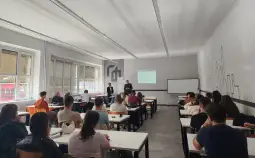
What message would you like to share with citizens of North Macedonia on the occasion of World Food Day and FAO’s 80th anniversary?
On the occasion of World Food Day and FAO’s 80th anniversary, I would like to congratulate the citizens of North Macedonia for their resilience in building their nascent nation and call on them to double their efforts for a better future. Farmers, women, and young people are the backbone of agriculture, and their daily work sustains us all. Yet the choices we make as consumers — supporting local farmers, reducing food waste, and choosing diverse and nutritious diets — are just as important for shaping a better future.
This year, we warmly invite you to join FAO, the Ministry of Agriculture, Forestry and Water Economy, and our partners in celebrating World Food Day 2025 and FAO’s 80th anniversary on 16 October in Skopje. Together, we will plant trees as a living symbol of our shared commitment to a greener and more sustainable future. The celebration will also feature an FAO 80th Anniversary Exhibition, children’s art activities linked to the World Food Day Poster Contest, and a local food market showcasing traditional foods and forest products.
I encourage everyone to take part in these activities and add your voice and commitment to building stronger, greener, and fairer agrifood systems — for better production, better nutrition, a better environment, and a better life for all.
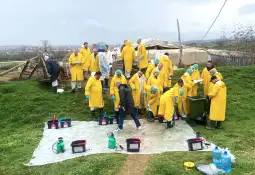
Partnerships are at the heart of FAO’s mandate. How does FAO see its collaboration with the Government, civil society, the private sector and international partners to advance sustainable and resilient agrifood systems in North Macedonia?
Partnerships have always been central to FAO’s mission, and in North Macedonia they are the foundation of all our work. FAO pursues partnerships that are as broad as possible, aligning with the joint efforts of the Government at both the central and municipal level, UN agencies, civil society, the private sector, academia, and development partners — all to ensure stronger coordination and aid effectiveness.
We work hand in hand with the Ministry of Agriculture, Forestry and Water Economy, the Food and Veterinary Agency, the National Extension Agency, the Agency for Real Estate Cadastre, the National Forest entities, and the National Hydrometeorological Service to strengthen national systems and policies. We also partner with leading academic institutions — the Faculty of Agricultural Sciences and Food, the Faculties of Forestry, Veterinary Science, and Civil Engineering — to advance research, innovation, and skills for future generations.
Farmers’ associations, producer organizations, and chambers of commerce are equally important allies, ensuring that reforms and innovations reach those who produce our food.
Internationally, FAO builds on strong partnerships with the European Union, the Green Climate Fund (through the Cabinet of the President of the Government as National Designated Authority), and other financing institutions to help the Macedonia government mobilize resources for climate resilience, rural development, and sustainable agriculture. Within the UN family, FAO collaborates closely with sister agencies to ensure coherent and coordinated support for advancing the Sustainable Development Goals.
Looking ahead, FAO will continue to serve as a trusted convener and technical partner — bringing together institutions, farmers, civil society, and international partners, and turning joint efforts into tangible progress for more resilient, competitive, and sustainable agrifood systems in North Macedonia, ensuring that no one is left behind.
Photo: FAO


